
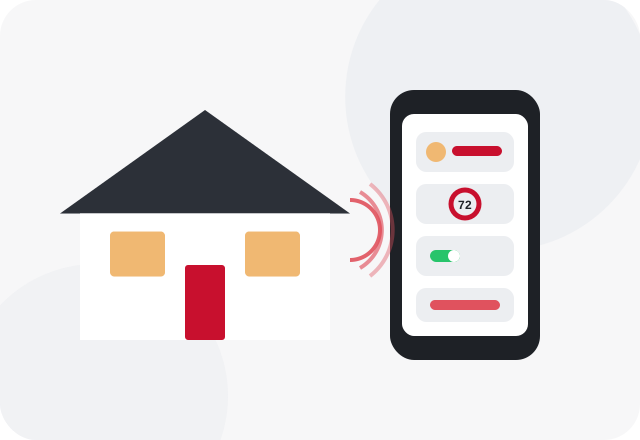
The details matter. Three-way and four-way switches need the right cables between locations, dimmers must match the fixtures, and many smart switches need a neutral wire in the box, which a lot of older Birmingham homes do not have.
Types of Switches and What They Need
A single-pole switch controls a light from one spot. Three-way switches work in pairs so a light can be controlled from two locations, connected by two traveler wires. Four-way switches go between a pair of three-ways to add a third or fourth location. Dimmers must be rated for the fixtures, especially LEDs.
Smart switches need constant power to run their electronics. Most get it from a neutral wire in the box. Current code generally requires a neutral at most new switch locations, but older homes were often wired as switch loops without one. See smart lighting for more on connected controls.
Reasons People Add or Change Switches
- A staircase or hallway lit from only one end
- A room entry where the switch is behind the door
- LED lights that need a proper dimmer
- Upgrading to smart switches or occupancy sensors
- Worn switches that feel loose or crackle
Switch Problems Worth Having Checked
- A switch plate that feels hot, not just warm
- Crackling, buzzing or sparking when flipped
- Lights that flicker when the switch is touched
- A three-way pair that works only in some positions
- Scorch marks around the plate
How Switch Work Gets Done
For a simple replacement, the electrician turns off the breaker, identifies each wire and installs the new device. Adding a location or converting to three-way control may require running new cable through walls. For smart switches, the electrician checks for a neutral and box space, and if one is missing, may run a new cable or suggest a device that does not require a neutral.
Ganged dimmers may need derating, and box fill limits how many devices and wires fit.
- Wire identification, including travelers and neutral
- Box size and fill for dimmers and smart devices
- Dimmer rating for the LED load
- Ground connection at the switch
- Correct operation from every location
Safety first. Do not open switch boxes or touch wires yourself. Dimmers can feel slightly warm, but a hot switch plate, crackling or sparking needs attention right away; turn the circuit off at the breaker. Burning smells or smoke that continues means leave and call 911. For a warm switch plate, see what a hot outlet or switch can mean.
How it usually works
Call about the switch
Explain what you want to control and from where; the call connects you with a local electrician.
Check the boxes
The electrician looks at wiring, neutral availability and box space.
Install and wire
Switches, dimmers or smart devices go in, with new cable where needed.
Test each location
Every switch and dimmer is tested, including the full range of LED dimming.
For Birmingham-area homes
Crestwood, Avondale and other early-1900s Birmingham neighborhoods often have switch loops with no neutral, shallow boxes and cloth-insulated wire. That is where smart switch upgrades go wrong most often. An electrician can tell you whether a neutral is present and whether older wiring should be updated before new devices go in.
Related electrical problems
Noticing one of these? Each guide explains likely causes and what's safe to check before you call about light switch installation.