
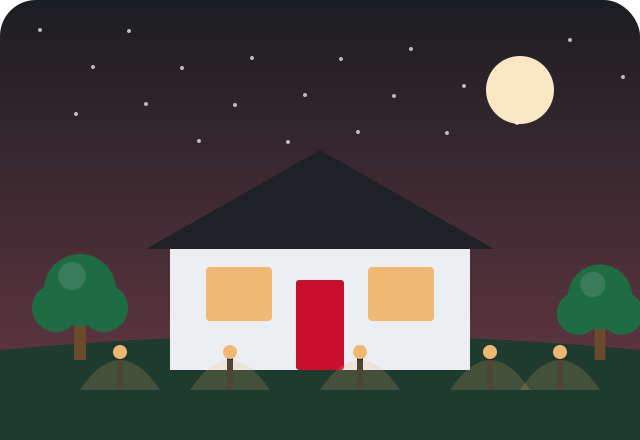
The electrical part most homeowners miss is the source. The transformer needs a weather-protected, GFCI-protected outlet or a hardwired connection, and it needs to be sized for the total fixture load. A landscape electrician handles that end, while the fixture layout can be as simple or detailed as you like.
How a Low-Voltage System Works
A transformer steps household voltage down to low voltage. From there, direct-burial cable runs to each fixture, either daisy-chained or in hub runs that split from one point so every light gets similar voltage. Long runs and too many fixtures on one cable cause voltage drop, which shows up as dim lights at the far end.
Most systems use a photocell, a timer or both. Some transformers have more than one output tap so the installer can compensate for longer runs.
Reasons to Add Landscape Lighting
- Steps and paths across a sloped yard that are hard to see
- Mature trees you want to light from below
- Stone retaining walls or a front facade worth showing at night
- An existing system with dead fixtures or dim sections
- A transformer plugged into an outlet with no in-use cover
Signs an Existing System Needs Work
- Lights at the end of a run much dimmer than those near the transformer
- The GFCI outlet feeding the transformer trips after rain
- Cable exposed on the surface or cut by edging
- Corroded connectors or fixtures that flicker
- A transformer that hums loudly or gets very hot
The Electrical Side of Landscape Lighting
The electrician confirms there is a suitable GFCI-protected outdoor outlet with an in-use cover (the bubble type that stays closed with a cord plugged in), or adds one through GFCI outlet installation. The transformer is mounted on a wall or post near that outlet. Total fixture wattage is added up and the transformer is sized with some room to spare.
Cable runs are planned to limit voltage drop, connections are made with waterproof connectors, and the cable is buried shallow in the beds. Anything near a pool or hot tub has extra spacing rules, so mention those in advance.
- GFCI protection and in-use cover at the source outlet
- Transformer capacity versus total fixture load
- Voltage at the farthest fixture on each run
- Waterproof connections and cable depth
- Photocell or timer placement

Safety first. Low-voltage cable is not dangerous to touch the way household wiring is, but the transformer's input is full household voltage. Never plug a transformer into an indoor outlet with the cord passed through a window, and never remove or bypass the GFCI feeding it. Call 811 before digging near utility lines.
How it usually works
Call to start
Describe the yard and what you want lit, and the call connects you with a local electrician.
Plan the source and runs
The electrician checks or adds the outdoor outlet and maps cable runs to each fixture area.
Install and connect
The transformer is mounted, cable is laid and fixtures are connected with sealed splices.
Aim and time
Lights are aimed after dark and the timer or photocell is set.
For Birmingham-area homes
Hillside neighborhoods around Birmingham have steep lots, stone steps and tall hardwoods, which is what makes landscape lighting popular there. Big roots and rocky ground can make trenching slow, and those same trees drop limbs in spring storms, so cable routes are usually planned around drip lines and away from where limbs land.
Related electrical problems
Noticing one of these? Each guide explains likely causes and what's safe to check before you call about landscape lighting.