Quick answer: Lights dim when an appliance turns on because large motors and heating elements pull a burst of current, and that surge causes a brief voltage drop across the wiring they share with your lights. A short, faint dip when a big motor starts is usually normal. Dimming that lasts, gets worse over time, affects the whole house or comes with heat, buzzing or a burning smell points to a wiring, connection or service problem that a licensed electrician should check.
It happens in a lot of Birmingham kitchens on a July afternoon: the air conditioner cycles on, and for a split second every light in the room sags. Maybe the microwave does it too, or the hair dryer in the bathroom. Most people notice it, shrug and move on.
Sometimes that shrug is the right call. Other times the dimming is the only visible symptom of a loose connection or an undersized circuit that is quietly getting hot. This guide explains what is actually happening in the wires, how to tell the harmless version from the concerning one, and what a local electrician looks at when the pattern does not seem right.
What is voltage drop, in plain terms?
Every wire has a little resistance. When current flows through it, some of the voltage gets used up along the way, so the device at the far end sees slightly less than what left the panel. That loss is voltage drop. Under a light load it is too small to notice.
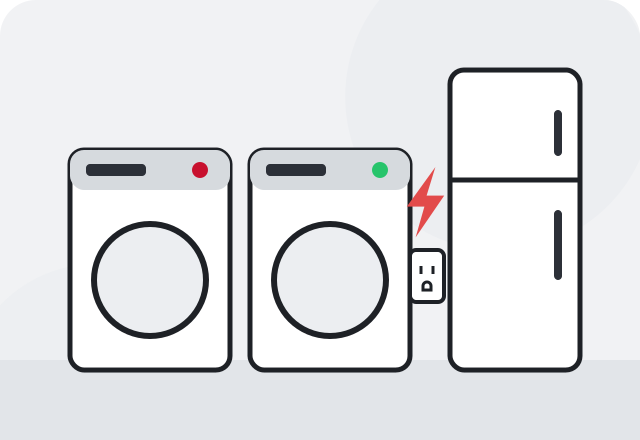
The trouble starts when a big load switches on. An air conditioner compressor, a refrigerator, a well pump or a vacuum cleaner can draw several times its running current for the first fraction of a second while the motor gets up to speed. That burst, called inrush current, briefly increases the drop on every wire it travels through. If your lights share any of that path, they dim along with it.
Once the motor is spinning, the current settles down and the lights come back to normal. That is why a healthy system shows a quick blink rather than a lasting dim.
When is dimming normal, and when is it not?
The answer depends mostly on how long the dip lasts, how deep it is and how far it reaches. Here is a practical way to sort it out:
- Usually normal: a brief, faint dip when a large motor starts, limited to lights on or near the same circuit, that has looked the same for years.
- Worth watching: dimming that seems deeper than it used to be, or that now happens with smaller appliances like a toaster or coffee maker.
- Needs a professional: lights that stay dim while the appliance runs, dimming throughout the whole house, or some lights getting brighter while others get dimmer.
- Stop and call right away: dimming along with a warm outlet or switch plate, buzzing, crackling, a burning or hot plastic smell, or a breaker that feels hot.
Some lights brightening while others dim is a specific warning sign. It can point to a problem with the neutral conductor at the panel or on the service, which can send higher than normal voltage to some circuits and damage electronics. Treat that pattern as urgent.
What causes lights to dim more than they should?
When dimming goes beyond the brief, normal blink, a few causes show up again and again in older and newer homes alike:
Shared or overloaded circuits
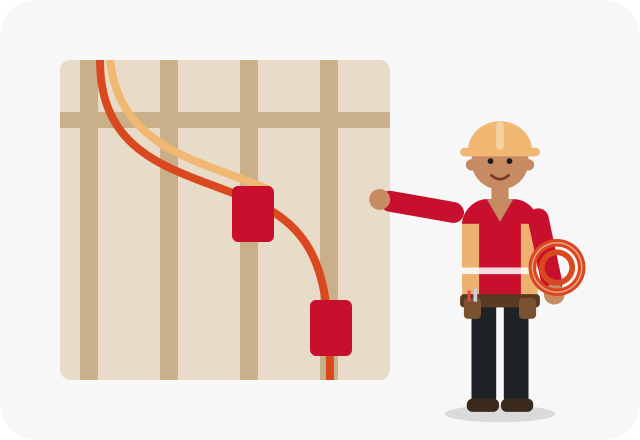
A large appliance sharing a general purpose circuit with lights is a common setup in older homes and in rooms that were remodeled without new circuits. The more that is on the circuit, the more the lights feel each start-up.
Loose or worn connections
A connection that has loosened at an outlet, switch, splice or breaker adds resistance right where current flows. That spot can dim the lights and also heat up. This is the cause electricians take most seriously.
Undersized or long wire runs
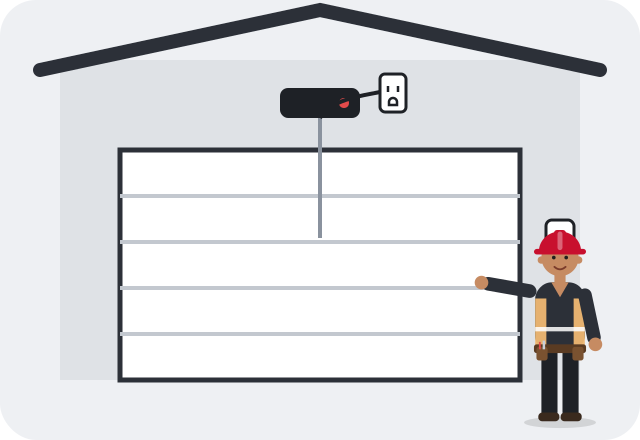
Thin wire over a long distance, such as to a detached garage or a far bedroom, loses more voltage under load.
Service or utility side issues
If the whole house dims, the problem may be at the main panel, the meter base, the service drop from the pole or on the utility side. Storm damage to the service drop can play a part.
Bulb and dimmer sensitivity
Some LED bulbs and dimmers react to small voltage changes more visibly than older incandescent bulbs did, which can make a normal dip look dramatic.
If the lights are flickering on their own rather than dipping with an appliance, the guide on why lights flicker covers that pattern in more detail.
What can you safely check yourself?
You can learn a lot without opening anything. Keep a short note on your phone of what you see:
- Which appliance triggers the dimming, and whether it happens every time.
- Which lights dim: one room, one side of the house or everything.
- Whether the dim lasts a split second or stays as long as the appliance runs.
- Whether any outlet, switch plate or cord near the appliance feels warm to a light touch.
- Whether the pattern changed recently, such as after a storm, a remodel or a new appliance.
If a breaker trips when the appliance starts, you can reset it once. If it trips again, leave it off and see the page on power going out when an appliance turns on.
Safety first. Do not remove outlet covers, switch plates or the panel cover to look for loose wires. Loose connections under load can arc. If you smell burning, see smoke or sparks, or a plate is hot, turn off the appliance, leave the area if it keeps going and call 911.

What does an electrician look at?
A licensed electrician will usually start by measuring voltage at the panel and at the affected outlets, both at rest and while the appliance starts. Comparing those readings shows whether the drop is happening on one branch circuit, on the main service or somewhere in between.
From there the fix depends on what they find. It might be tightening or replacing a worn connection, moving a large appliance to its own dedicated circuit, replacing a failing breaker, or correcting a neutral problem. In homes where the panel is simply out of capacity, electrical troubleshooting may lead to a conversation about a panel upgrade so heavy loads like air conditioning and a range have room to run.
Why this shows up in Birmingham homes
Two local factors make this question common. Long, hot, humid summers keep air conditioners and heat pumps cycling all day, so any weakness in the wiring gets exercised hundreds of times a week. And many homes in older neighborhoods such as Avondale, Crestwood or Norwood were wired decades before central air, large refrigerators and computers in every room were typical. Adding modern loads to original circuits is where dimming often begins. The Birmingham area page has more on how the local housing stock affects electrical needs.
Key takeaways
- A brief, faint dip when a large motor starts is usually normal voltage drop.
- Dimming that lasts, spreads through the house or keeps getting worse deserves a professional check.
- Some lights brightening while others dim can signal a neutral problem and should be treated as urgent.
- Heat, buzzing or a burning smell along with dimming means turn things off and call for help.
- Common fixes include repairing loose connections, adding dedicated circuits and addressing panel capacity.
Frequently asked questions
A quick, slight dip as the compressor starts is common and usually harmless, because the motor draws a burst of current for a moment. If the dimming lasts, is getting deeper each summer, or affects the whole house, have an electrician check the circuit and the service connections.
A microwave draws a steady, fairly large load the entire time it runs rather than a short start-up burst. If lights stay dim the whole time, the microwave may share a circuit with them or there may be a weak connection somewhere on that circuit, both of which a local electrician can check.
Brief dips are generally tolerated by appliances. Sustained low voltage can make motors run hotter and work harder, and swings caused by a neutral problem can damage electronics. If you see ongoing low voltage or lights brightening and dimming unevenly, have it evaluated rather than waiting.
Dimming across the whole house usually points to something shared by every circuit, such as the main panel, the meter base, the service drop or the utility connection. An electrician can measure voltage at the panel to narrow it down and let you know if the utility needs to be involved.
LED bulbs use less power, so they add less load, but they do not fix the underlying cause. Some LEDs actually show small voltage changes more visibly than old bulbs. If dimming is new or getting worse, focus on the wiring rather than the bulbs.
Many large appliances are expected to have a dedicated circuit under current electrical code and the manufacturer's instructions, including ranges, dryers, and most air conditioners. Moving a heavy load off a shared lighting circuit is one of the most common fixes for dimming in older homes.