
People look into an electrical panel upgrade in Birmingham when they add central air or a heat pump, an EV charger, a hot tub, a big kitchen remodel or an addition. A call connects you with a local electrician who can run the numbers and explain what the upgrade would involve at your address.
What Changes in a Service Upgrade
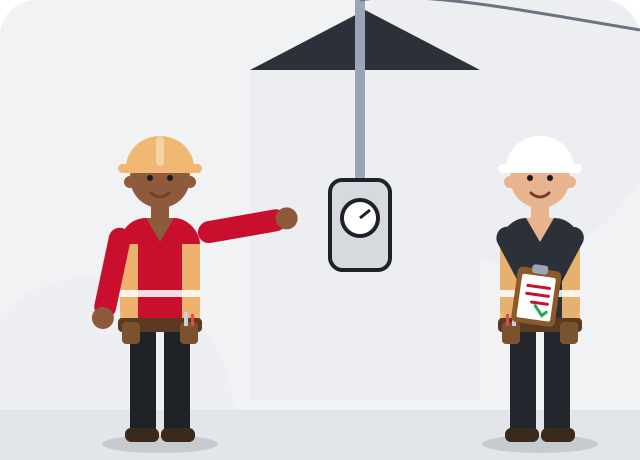
A true service upgrade usually replaces more than the panel. The meter base, the service entrance cable or overhead mast, the main breaker and the grounding system may all be sized up together. The utility has to disconnect and reconnect service and may need to change its own drop or meter.
The first step is a load calculation, a standard method in the National Electrical Code that adds up lighting, receptacles, appliances and heating and cooling to estimate demand. Sometimes the answer is that your current service is enough and you only need more space, which is closer to a panel replacement or a subpanel.
Projects That Often Trigger an Upgrade
- Adding central air, a heat pump or electric heat strips
- Planning an EV charger installation on an already busy panel
- Adding a hot tub, pool equipment or a detached workshop
- Converting gas appliances such as a range or water heater to electric
- Building an addition or finishing a basement
Signs You're Running Out of Capacity
- The main breaker trips on hot afternoons with everything running
- No open breaker spaces, or many tandem breakers squeezed in
- Lights dim noticeably when the AC or dryer kicks on
- Existing service is 60 or 100 amps with modern appliances
- An electrician has told you a new circuit won't fit
How the Upgrade Is Planned and Done
After the load calculation, the electrician confirms the new service size, pulls the permit and coordinates timing with the utility. On installation day the power is off while the new meter base, service conductors, panel and grounding are installed. An inspection follows, and then the utility reconnects. Scheduling depends on the utility and the inspector, so allow some lead time.
The electrician can also plan spare spaces for future circuits so the next project doesn't require another upgrade. For background, see the panel upgrade guide.
- A written load calculation for the home and planned additions
- Condition and size of the meter base and service entrance
- Clearance for the overhead drop over roofs, trees and driveways
- Grounding electrodes and water pipe bonding
- Space for future circuits in the new panel
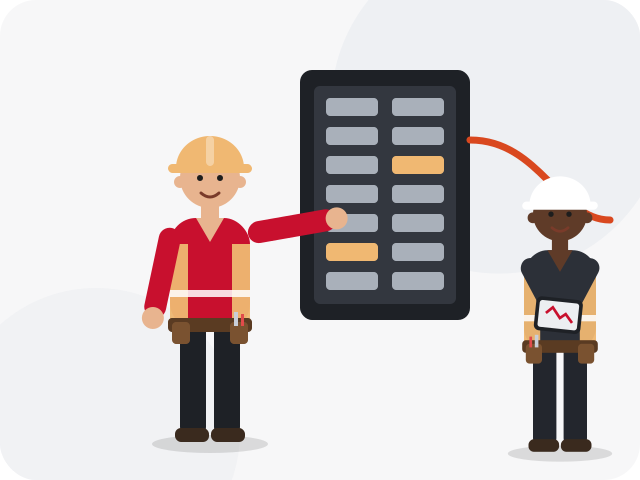
Safety first. Service conductors ahead of the main breaker cannot be shut off from inside the house, and only the utility can de-energize them. Never tamper with the meter or its seal. If a tree limb brings down the service drop, stay well away and call the utility.
How it usually works
Call about your plans
Describe what you want to add and your current service size if you know it. You'll be connected with a local electrician.
Load calculation
The electrician measures, lists your loads and recommends a service size.
Permit and utility coordination
Paperwork is filed and a disconnect and reconnect date is arranged with the utility.
Installation and inspection
New service equipment goes in, is inspected, and power is restored.
For Birmingham-area homes
Central Alabama's long, humid summers put a heavy, steady air-conditioning load on older homes, and many houses in Avondale and Crestwood still run on service sized for a far smaller electrical life. On wooded ridges, the overhead drop also has to clear mature trees, which can shape where the new mast and meter go.
Related electrical problems
Noticing one of these? Each guide explains likely causes and what's safe to check before you call about electrical panel upgrade.