
It is work for a licensed electrician because a new outlet is only as safe as the circuit feeding it. A call through this site connects you with a local electrician who can look at what you want to plug in, where, and whether the existing wiring can carry it.
What Adding an Outlet Actually Involves
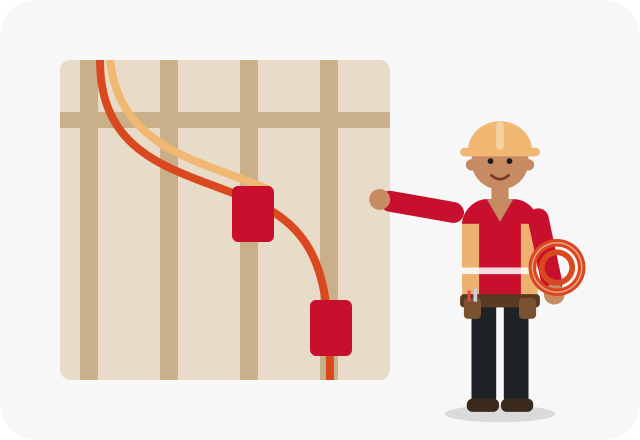
Some new outlets are simple extensions of a nearby circuit: the electrician fishes a cable through the wall from an existing box, sets a new box, and installs the receptacle. Others need a brand-new circuit from the panel because the load is large or the code calls for it, such as the two 20-amp small-appliance circuits in a kitchen, a 20-amp bathroom circuit, or a laundry circuit.
The type of receptacle matters too. New outlets in living spaces are normally tamper-resistant, outdoor and damp locations need weather-resistant devices with in-use covers, and many locations need GFCI or AFCI protection under current code.
Good Reasons to Add Outlets
- Rooms where every wall has only one outlet and cords run under rugs
- A kitchen counter where appliances share a single overloaded receptacle
- A home office corner that needs power for a desk, monitor and printer
- A new chest freezer, window unit or workbench in the garage
- Porch, deck or patio spots where you currently run cords out a window
Clues the House Is Short on Receptacles
- Power strips plugged into power strips
- Extension cords that stay in place permanently
- Breakers that trip when two appliances run on the same counter
- Outlets that are warm after long use, which should be checked, not just avoided (see warm outlet causes)
- Two-prong outlets that will not accept modern three-prong plugs
How an Electrician Plans the Job
Before cutting into a wall, the electrician figures out which circuit can take the new outlet, how much is already on it, and the cleanest cable path. In finished rooms that often means fishing through an attic, a crawlspace or a basement ceiling so drywall repair stays small. If the existing circuit is already busy, a new home run to the panel is usually the better answer, which also depends on having breaker space. Permit requirements vary, so check with your city or county.
- Load on the existing circuit and available panel space
- Wire gauge matched to the breaker size (14-gauge for 15 amps, 12-gauge for 20 amps)
- Required GFCI and AFCI protection for the location
- Tamper-resistant and weather-resistant devices where required
- Proper grounding back to the panel
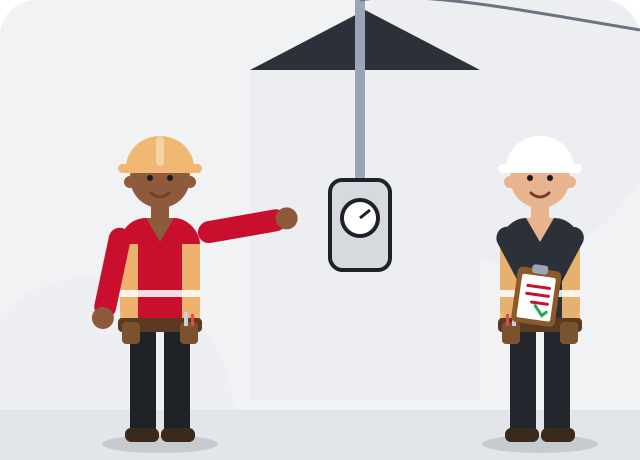
Safety first. Do not add outlets by tapping into lamp cords, junction boxes or an existing outlet with a plug-in adapter meant to be permanent. Extension cords are for temporary use only. Any outlet that is scorched, hot to the touch or smells like burning plastic should stay unused until an electrician checks it.
How it usually works
Call and describe the spots
Tell the person on the phone where you want outlets and what you plan to plug in, and you'll be connected with a local electrician.
On-site look at the circuits
The electrician checks the panel, nearby circuits and cable paths, then explains options and cost factors.
Installation
Boxes are cut in, cable is fished or run, and the right receptacle and protection are installed.
Testing
Each new outlet is tested for correct polarity, grounding and GFCI or AFCI function before the job is wrapped up.
For Birmingham-area homes
A lot of Birmingham homes were built in the early and mid 1900s, when a bedroom might have had one or two outlets and a kitchen had a single counter receptacle. Houses in places like Avondale, Crestwood and Forest Park have been updated in stages, so it is common to find a modern kitchen next to a bedroom still wired the old way. Adding outlets in those homes often goes hand in hand with a look at the panel, and sometimes with a larger rewiring plan when the original cable is in poor shape.
Related electrical problems
Noticing one of these? Each guide explains likely causes and what's safe to check before you call about electrical outlet installation.