
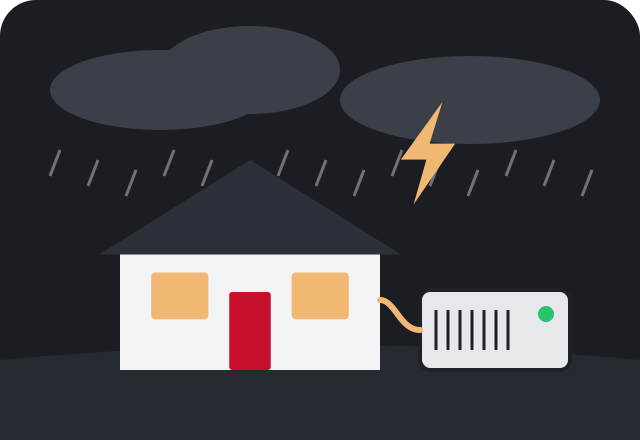
If your Birmingham generator showed an alarm, failed its weekly exercise or did not pick up the house during the last outage, sorting out which side the problem is on saves time. A call connects you with a local electrician who works on standby systems.
Electrical Faults That Stop a Standby Generator
The transfer switch is a frequent culprit. Worn contacts, a failed control board, a stuck solenoid or a loose utility sensing wire can leave the switch unable to recognize an outage or move the load to the generator. After storms, surge damage to the switch controls is also common.
Batteries and charging are the next most common issue. Standby batteries age out, and the trickle charger that keeps them topped up needs power from a house circuit; if that circuit trips, the battery slowly drains until the unit cannot crank. Tripped generator output breakers and controller error codes round out the list.
Situations That Call for a Look
- The unit ran but the house stayed dark during an outage
- The weekly exercise stopped happening
- An alarm or fault light appears on the controller
- The generator would not crank or cranked slowly
- The house did not switch back to utility power after an outage
Clues to Check Before You Call
- The controller shows a battery, overcrank or low voltage warning
- The generator's own output breaker is in the off or tripped position
- The breaker feeding the generator's battery charger is tripped
- Only some circuits came on during the outage
- A burning smell or scorch marks near the transfer switch
Electrician or Dealer: Who Handles What
An electrician tests the transfer switch, utility sensing and control wiring, checks the charger circuit and battery connections, and verifies breaker sizes and connections between generator, switch and panel. Engine problems, oil leaks, fuel pressure, internal alternator faults and firmware updates usually belong with the manufacturer's authorized dealer, especially if the unit is still under manufacturer coverage. If the system was never sized or installed correctly, see whole-home generator planning, and for portable setups see generator installation.
- Transfer switch contacts, controls and utility sensing wires
- Battery condition, terminals and charger power supply
- Controller fault history and exercise settings
- Generator output breaker and conductor connections
- Surge damage after storms
- Load management modules that shed or restore circuits

Safety first. A standby generator can start automatically at any moment, even while you are standing next to it. Do not open the enclosure or transfer switch to investigate. Turn the unit off at the controller only as the owner's manual describes. If you smell fuel, leave the area and call your gas provider or 911.
How it usually works
Call with what the controller shows
Note any error codes, alarms and what happened during the last outage.
Diagnose the electrical side
The electrician tests the switch, charger circuit, battery and wiring.
Repair or refer
Electrical faults are corrected; engine or internal issues are referred to the authorized dealer.
Simulated outage test
The system is tested by simulating loss of utility power and restoring it.
For Birmingham-area homes
Birmingham's frequent spring and summer lightning is hard on standby systems, since a surge can damage transfer switch controls without anyone noticing until the next outage. Long humid summers also shorten battery life and corrode terminals. Checking the system each spring before storm season, and after any nearby lightning strike, is a sensible habit here.
Related electrical problems
Noticing one of these? Each guide explains likely causes and what's safe to check before you call about generator repair.