
What homeowners usually notice
- The outlet moves, tilts or pushes back into the wall when you plug something in.
- Plugs fall out or sag under their own weight.
- The cover plate is cracked or there is a gap between the outlet and the wall.
- Plugs feel warm after use, or the lamp flickers when the cord is bumped.
What to do right now
- Stop using the outlet for heavy loads like space heaters, hair dryers or vacuums.
- Unplug anything that is loose or sagging, especially overnight.
- Check the faceplate and plug for warmth or discoloration.
- If it is warm, buzzing or scorched, switch off its breaker and leave it off.
Likely causes
Worn contacts
The spring contacts inside an outlet weaken after years of plugs going in and out. Older and lower-grade outlets lose their grip first.
Box set too deep or loose
If the electrical box is recessed behind drywall or has come loose from its stud, the outlet has nothing solid to tighten against.
Broken mounting ear or stripped screw
The outlet's mounting tabs can crack, or the screw holes in the box can strip out.
Heavy plugs and adapters
Wall-plug chargers, multi-tap adapters and big transformers lever the outlet with their weight and wear it faster.
Old installations
In older Birmingham homes, outlets in plaster walls or in boxes added during past DIY projects often sit loosely.
Safe checks you can make
- Note whether the outlet itself moves, or only the plug slides out.
- Check other outlets in the same room; a pattern suggests age rather than one bad device.
- Feel the faceplate after using the outlet for a while to see if it is warm.
- Look for brown or black marks around the slots or on plug prongs.
Leave outlet covers, switch plates and the panel cover in place. Noting what you see and hear is enough; testing inside boxes belongs to an electrician.
Is this something you can fix yourself?
If the outlet is solid in the wall and only the cover plate is loose, snugging the single faceplate screw is fine. Replacing a cracked cover plate with power off at the breaker is also a common homeowner task. Anything beyond that, like shimming a recessed outlet, fixing a loose box or replacing worn contacts, means pulling the device out of the box where the wiring lives. That part is for a professional, and it is quick work for them.
When professional help is the right call
- The outlet or plug gets warm, or smells hot.
- There are scorch marks, melted plastic or a crackling sound.
- Several outlets in the house are loose or no longer grip plugs.
- The outlet is two-prong or ungrounded and you rely on it for electronics.
- Lights flicker or power drops when something is plugged in.
Safety first. An outlet that is hot, crackles, sparks or has scorch marks should be taken out of service now: unplug everything and switch off its breaker if you can identify it. If you see smoke or flame, leave and call 911. Loose outlets that stay cool can be scheduled, but should not be ignored.
What an electrician typically checks
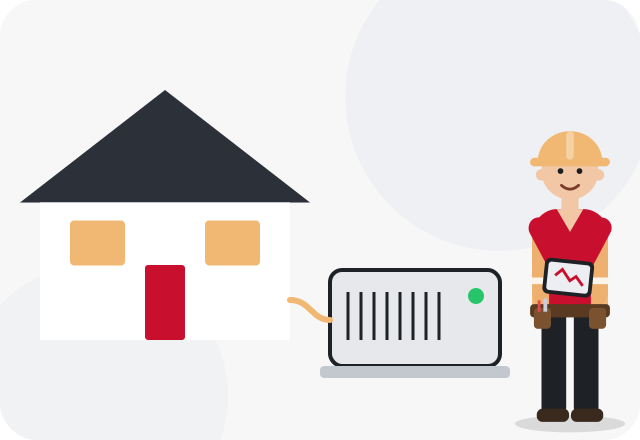
An electrician turns off the circuit, pulls the outlet and checks the wire connections, the condition of the insulation and how the box is mounted. Loose or backstabbed wires are reattached properly, and the box is secured or brought flush with box extenders or spacers.
Worn outlets are replaced with new, tight-gripping devices, and they may suggest tamper-resistant or GFCI outlets where current code calls for them. This is standard electrical outlet repair, and it is often combined with checking other outlets on the same circuit.
Keeping it from coming back
Pull plugs by the plug head, not the cord. Use a short cord or power strip instead of hanging heavy chargers and adapters directly on the outlet. Replace outlets as soon as they stop gripping well. If many outlets in an older home are loose, discolored or two-prong, ask about a broader look at the wiring; see signs a home needs rewiring for other clues.