Quick answer: An electrical outlet gets hot when current meets resistance it should not, most often from a loose wire connection, a worn receptacle that no longer grips plugs, or a heavy appliance drawing close to the circuit's limit. Slight warmth while a heater or hair dryer runs can be normal, but an outlet that is hot to the touch, discolored or warm with nothing plugged in needs to be switched off and checked by a licensed electrician.
Most people discover a hot outlet by accident. You unplug a phone charger or a space heater and the plug is hotter than it should be, or you brush the wall plate and pull your hand back.
A hot outlet is worth taking seriously because it usually means heat is building at a connection point, and connections are where many electrical fires begin. This guide separates normal warmth from real heat, walks through why outlets heat up, and explains what you can safely do before a licensed electrician takes a look.
How warm is too warm?
Some warmth is expected. Anything that turns electricity into heat, like a space heater, iron or hair dryer, pulls a lot of current, and the plug and outlet can feel mildly warm after a while. Dimmer switches also run warm by design. None of those should be uncomfortable to touch.
Use this rough guide:
- Mildly warm while a heavy appliance runs, cool again shortly after: usually normal, but watch it.
- Too hot to keep your hand on comfortably: not normal. Turn off the load and the circuit.
- Warm with nothing plugged in: not normal. Heat is coming from the wiring or the receptacle itself.
- Discolored, melted, sparking or smelling of hot plastic: stop using it right away.
What makes an outlet heat up?
Heat comes from resistance. A good connection has very little of it, so current passes through without warming anything. When something adds resistance, that spot becomes a small heater. The usual suspects:
- Loose terminal screws where the wires attach to the receptacle, often loosened by years of heating and cooling.
- Push-in (backstab) connections, which rely on a small spring clip and can loosen over time.
- Worn receptacles whose contacts no longer grip plugs tightly, so the plug wiggles and arcs.
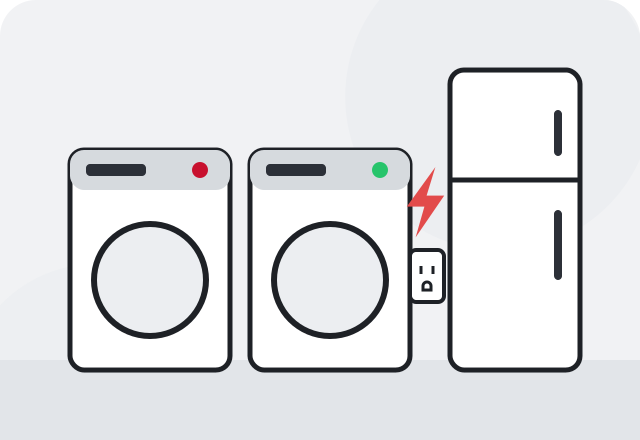
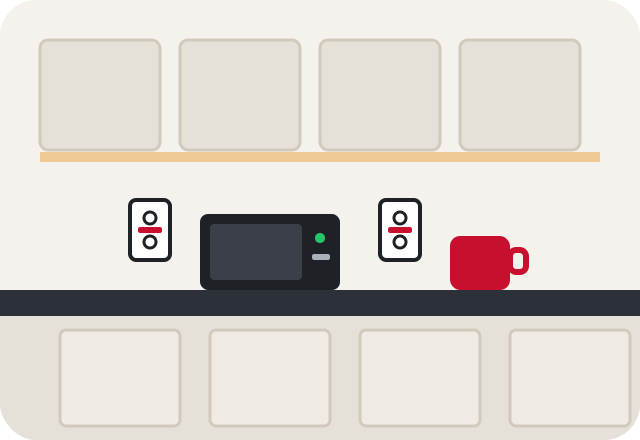
- Heavy loads close to the circuit's limit, such as space heaters, window air conditioners or a microwave on a shared counter circuit.
- Loose-fitting or damaged plugs on the appliance side.
- Older aluminum branch wiring, used in some homes built around the 1960s and 1970s, which needs compatible devices and connections.
In a Birmingham summer, window units and portable air conditioners often run for hours on end, and in winter the same outlets may feed space heaters. That constant load is exactly the kind of stress that exposes a weak connection.
What can you safely check yourself?
There are a few things you can do without opening anything:
Unplug and let it cool
Unplug whatever is connected, if the plug itself is not damaged or too hot to handle. Wait and see whether the outlet cools down.
Try the plug's fit
A plug that slides in with almost no resistance or falls out on its own means the receptacle is worn.
Look for damage
Check for brown or black marks, a melted face or a cracked cover plate.
Check what shares the circuit
Notice whether other outlets or lights on the same circuit also run heavy loads, like a heater and a vacuum at the same time.
Turn off the breaker if it stays warm
If the outlet is warm with nothing plugged in, switch its circuit off at the panel and leave it off.
Do not remove the cover plate to look. Tightening screws or pulling a receptacle out of the box means working near live conductors. Leave that to a licensed electrician, who will shut the circuit off and verify it is dead first.
Is the space heater the problem, or the outlet?
Both, often. A space heater on a sound, properly sized circuit should not make an outlet hot. But heaters draw close to the maximum many general-purpose circuits can carry, so any weakness in the receptacle or wiring shows up quickly. Plugging a heater into a power strip or light extension cord makes it worse.
If an outlet only gets hot when the heater runs, move the heater to a different outlet on a less busy circuit and have the original one checked. If you rely on a heater or window unit in the same spot every year, it may make sense to ask about a dedicated circuit. The page on an outlet that feels warm covers the milder version of this problem.

Why older homes see this more often
Many Birmingham homes, especially in neighborhoods built in the early and mid 1900s, still have original or very old receptacles, some of them two-prong. Decades of plugging and unplugging wear out the contacts, and years of heat cycles loosen terminal screws. Past do-it-yourself work sometimes adds undersized wire, crowded boxes or mismatched devices. None of this is visible from the outside, which is why warmth is often the first clue.
If you find one hot outlet in an older house, it is reasonable to have the electrician look at others on the same circuit while they are there. Replacing a single worn receptacle is usually a straightforward outlet repair, while widespread problems may point toward a larger conversation about the wiring.
When should you call right away?
Call an electrician promptly if an outlet is hot with nothing plugged in, if it is discolored or melted, if a plug has partly melted into it, or if the circuit's breaker is also tripping. If you smell burning, the guide on what a burning electrical smell means explains what to do next. If you see smoke, flame or sparks, or heat that keeps building, leave the house and call 911.
Key takeaways
- Mild warmth under a heavy load can be normal; heat you cannot comfortably touch is not.
- An outlet warm with nothing plugged in means the heat is coming from the wiring or receptacle.
- Loose connections, worn receptacles and heavy loads like space heaters are the most common causes.
- Unplug, switch off the circuit if needed and leave the cover plate on.
- Discoloration, melting, burning smells or smoke call for immediate action.
Frequently asked questions
An outlet that is warm with no load usually has a loose or damaged connection, or it may be passing current through to other outlets further down the circuit. Either way, heat is being produced at a connection. Turn off the breaker and have an electrician inspect it.
Slight warmth can be normal because heaters draw a lot of current. If the outlet or plug becomes hot, discolored or smells like plastic, stop using that outlet. The receptacle may be worn or the circuit may be close to its limit.
Chargers produce some heat, but a charger plug that is hot, or an outlet that heats around it, can mean the receptacle contacts are loose or the charger is failing. Try the charger in another outlet. If only one outlet runs hot, that outlet needs attention.
Yes. When a plug fits loosely, the contact area shrinks and current passes through a smaller point, which creates heat and sometimes small arcs. Worn receptacles are a common reason plugs feel loose, and replacing the receptacle usually solves it.
Dimmer switches normally run slightly warm, especially with higher loads. A standard on/off switch should not feel warm. A hot switch, or a dimmer that is hot rather than warm, should be checked for a loose connection or an overloaded fixture circuit.
Push-in connections use a small spring clip instead of a screw clamp, and over years of heat cycling some of them loosen. Not every backstabbed outlet fails, but they are a common finding when an electrician opens a hot receptacle, and many prefer screw terminals when replacing devices.