
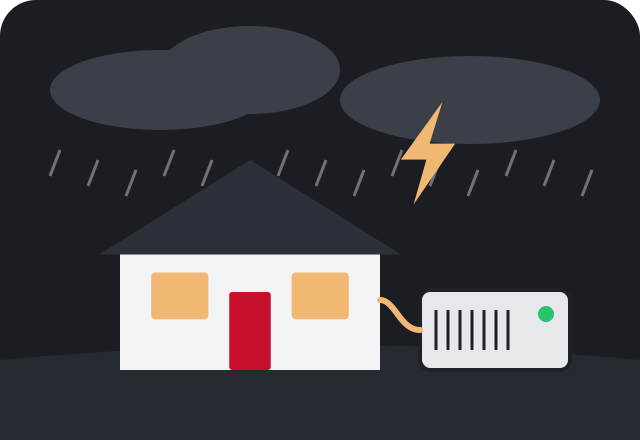
This page compares the two paths for Birmingham homeowners. If you already know you want a permanently installed unit that covers the whole house, see whole-home generator planning. Calling connects you with a local electrician who installs generator connections.
Two Ways to Get Backup Power
The portable route adds a weatherproof power inlet box on the outside wall and either an interlock kit on the main panel or a manual transfer switch. During an outage you roll the generator out, plug in a cord, flip the main breaker off and the generator breaker on, and choose which circuits to run. It keeps essentials going: refrigerator, some lights, a furnace blower, phone charging, maybe a window unit.
A standby generator sits on a pad outside, runs on natural gas or propane, and connects through an automatic transfer switch. When utility power drops, it starts and takes over within moments, with no one needing to be home. It can be sized for selected circuits or for the whole house.
Who Tends to Choose Each Option
- Portable inlet: households that already own a generator and want a safe hookup
- Portable inlet: homeowners comfortable running a generator outside during storms
- Standby: homes with medical equipment, sump pumps or people who travel often
- Standby: homeowners who want central air and the full house running
- Either: anyone tired of running extension cords through windows
Signs Your Current Backup Setup Is Unsafe
- A double-ended cord plugged into a dryer or wall outlet to backfeed the house
- A portable generator run in the garage, carport or near windows
- Extension cords snaking through doors that cannot close
- No transfer switch or interlock between the generator and utility
What Installation Involves
For a portable setup, the electrician mounts the inlet, installs the interlock or transfer switch, sizes the cord and breaker to the generator's output and walks you through the switchover sequence. For standby units, the job includes a pad or mounting base, the transfer switch, wiring between the generator and switch, coordination with a gas fitter for fuel, and permits. The home generator installation guide covers the steps in more depth.
- Generator output and which circuits it can reasonably support
- Panel compatibility with an interlock kit
- Inlet location away from windows and doors
- Transfer switch type and rating
- Grounding and neutral arrangement for the generator
Safety first. Never backfeed a house through a dryer or wall receptacle; it can electrocute utility line workers and start fires. Run portable generators outdoors only, well away from doors, windows and vents, and never in a garage, even with the door open. Use carbon monoxide alarms inside the home during any outage when a generator is running.
How it usually works
Call about backup power
Describe what must stay on during an outage and if you already own a generator.
Assess the home
The electrician looks at the panel, fuel options and where equipment can go.
Install the connection
The inlet and interlock, or the standby unit and transfer switch, are installed under permit.
Walk-through and test
The system is tested and you learn how switchover works.
For Birmingham-area homes
Central Alabama sits in Dixie Alley, and spring and fall storms regularly bring down tree limbs on service drops across Birmingham's wooded hills. Outages after those storms can last from hours to days depending on damage. Occasional winter ice adds another risk. Homes on long wooded streets in places like Springville, Remlap or Harpersville may wait longer for restoration, which is why backup power questions come up so often here.
Related electrical problems
Noticing one of these? Each guide explains likely causes and what's safe to check before you call about generator installation.