Quick answer: A home may need rewiring when it has original wiring that is several decades old (such as knob and tube or ungrounded cloth-insulated cable), when you see warm switches or outlets, frequent tripping, flickering, scorch marks or brittle insulation, or when the existing wiring cannot safely support modern loads. Not every older house needs a full rewire; many need partial updates. A licensed electrician can evaluate the wiring and tell you which parts need attention.
Birmingham has a deep stock of older homes. Bungalows in Crestwood, foursquares near Highland Park, cottages in Avondale and brick houses in Ensley and West End were built long before central air, home computers and a phone charger in every room. Many have had their wiring updated over the years. Some have not, or were updated in pieces.
Wiring does not usually fail with a single dramatic event. It wears gradually: insulation dries out, connections loosen, and circuits get overloaded as needs grow. The signs below help you recognize when that slow wear is worth a professional look.
Signs you can see
Start with what is visible from the outside of walls and devices. You do not need to open anything to spot these:
- Two-prong outlets throughout the house, which usually mean no ground wire on those circuits.
- Discoloration, scorch marks or melted plastic on outlets, switches or plates.
- Cloth-covered wiring visible in an unfinished basement or attic, or porcelain knobs and tubes on framing.
- Extension cords and power strips used permanently because there are not enough outlets.
- Loose outlets where plugs fall out easily.
- Few or no GFCI outlets in kitchens, bathrooms, laundry areas and outdoors.
If you see cloth-insulated wires in the attic, do not handle them. Old insulation can be brittle and may crumble.
Signs you can hear, smell or feel
Some of the most important signs show up through your other senses:
- A switch plate or outlet cover that feels warm to a light touch.
- Buzzing or crackling from an outlet, switch or light fixture.
- A faint burning or hot plastic smell with no obvious source.
- A mild tingle when touching an appliance or fixture.
These are stop signs. Heat, burning smells, crackling and shocks are not things to monitor for a few weeks. Turn off the affected circuit at the breaker if you can do so safely, and call a licensed electrician. If there is smoke, sparking or flame, leave the house and call 911.
The guide on burning electrical smells explains how to respond when you notice an odor.
Signs in how the system behaves
Everyday behavior can also point to worn or overloaded wiring:
- Breakers that trip often, or fuses that blow regularly.
- Lights that flicker or dim when appliances start.
- Bulbs that burn out much faster than they should.
- Outlets or whole rooms that stop working intermittently.
Any one of these can have a simple cause. Several together in an older home suggests the wiring deserves a closer look. The article on lights dimming when appliances run covers one of these patterns in detail.
Old wiring types an electrician may find
Knowing the names helps when you read an inspection report:
Knob and tube
Individual wires run through porcelain knobs and tubes, common in homes built in the early 1900s. It has no ground, the insulation ages, and it was not designed to be buried in insulation or carry modern loads.
Early cloth-insulated cable
Common in mid-century homes. Many runs have no ground wire, and the rubber and cloth jacket can become brittle, especially where it has been exposed to heat.
Aluminum branch wiring
Used in some homes built in the 1960s and 1970s. It can be safe with proper connections and devices, but connections at outlets and switches need attention.
Mixed and patched wiring
Decades of additions and past do-it-yourself work can leave a patchwork of materials and splices, some hidden in walls or attics.

Full rewire or partial update?
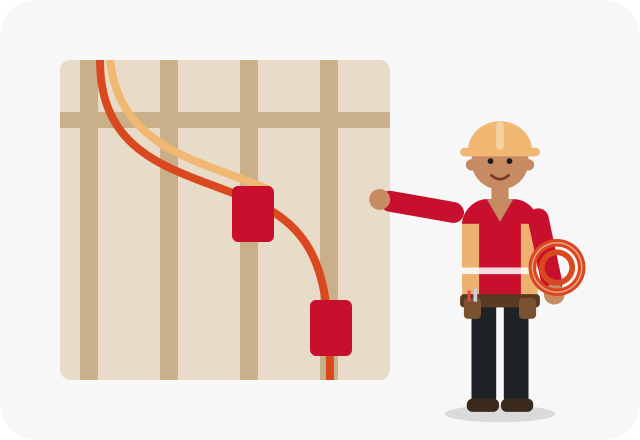
The word rewiring sounds like tearing out every wall, but it often is not. An electrician may recommend replacing the oldest circuits, adding grounded circuits to kitchens and bathrooms, installing GFCI and AFCI protection, and updating the panel, while leaving sound newer wiring in place.
A full home rewiring is more likely when most of the house still runs on knob and tube or deteriorated cable, or when a major renovation already opens up the walls. Cost factors include the size of the house, how accessible the attic and crawl space are, plaster versus drywall, how many circuits are added and whether the panel changes. An electrical inspection is usually where the decision starts.
Why older Birmingham neighborhoods see this often
Birmingham grew fast as an iron and steel city, and many neighborhoods filled in during the early and mid 1900s. Homes in Birmingham neighborhoods like Southside, Avondale and Norwood often carry layers of electrical history: original circuits, a mid-century update, a later kitchen remodel. Plaster walls, crawl spaces and hilly lots can make access harder, which is one reason a careful evaluation before any work matters.
Key takeaways
- Warm plates, burning smells, crackling and shocks are urgent; do not wait.
- Two-prong outlets, cloth wiring and knob and tube are common clues in older homes.
- Frequent trips, flickering and dead outlets can point to worn or overloaded wiring.
- Many homes need a partial update rather than a full rewire.
- An inspection by a licensed electrician is the right first step.
Frequently asked questions
Existing knob and tube wiring is not automatically required to be removed in most places, but it is outdated, ungrounded and often flagged by home inspectors and insurance companies. Current code limits how it can be extended or covered by insulation. A licensed electrician can tell you how it affects your specific home.
Swapping a two-prong outlet for a three-prong one without a ground wire creates a false sense of safety and is not allowed unless specific protections are added. This involves opening outlet boxes, so it is a job for a licensed electrician who can add grounding or GFCI protection as appropriate.
Home inspection reports often note the wiring type, and visible runs in an unfinished basement or attic can offer clues. For a clear answer, an electrician can check the panel and a sample of outlets and switches without you opening anything.
Usually not. Electricians often fish new wire through walls from the attic, crawl space or basement and open only small access holes. Plaster walls and tight access can make this harder, but full demolition is rarely needed just for wiring.
Many families stay in the home during a partial rewire, with power off to certain areas during the day. A full rewire may be more disruptive. Ask the electrician how they phase the work and which rooms will be affected.
If an inspection flags knob and tube, ungrounded circuits or signs of overheating, it is wise to get an electrician's evaluation before closing so you understand the scope. That information can help you plan, budget and ask the right questions.