Aluminum Wiring in House Birmingham AL: What It Means for Your Safety, Comfort, and Repair Budget
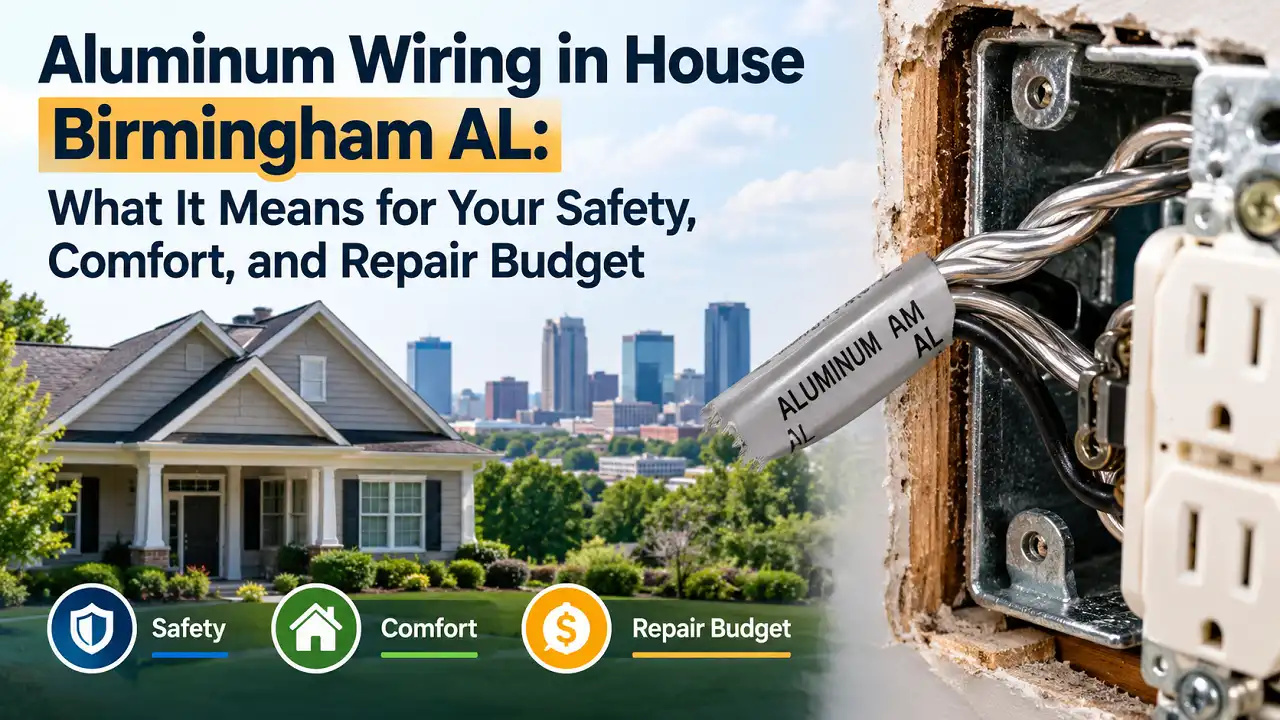
A warm outlet cover or a faint plastic smell in the hallway is easy to ignore. With aluminum wiring in house Birmingham AL properties built between the mid-1960s and early 1970s, those small clues can be the first signs of a failing connection. Aluminum branch wiring does not usually fail along the wire. It fails at the outlets, switches, and splices, often hidden inside a wall.
The so what for you is simple: a home that looks fine can still have connections creeping toward fire hazard conditions, and Alabama’s heat, humidity, and heavy cooling loads speed that process up.
Key Takeaways
- Homes built roughly 1965 to 1973 are the most likely to have single-strand aluminum branch wiring. Check for “AL” or “ALUMINUM” printed on the cable jacket.
- The U.S. Consumer Product Safety Commission (CPSC) recommends COPALUM crimp connectors or AlumiConn connectors as permanent repairs, with full rewiring as the complete fix.
- Warm outlets, flickering lights, and burning smells need a licensed electrician fast. Never try a DIY fix on aluminum connections.
What Is Aluminum Wiring and When Was It Used?
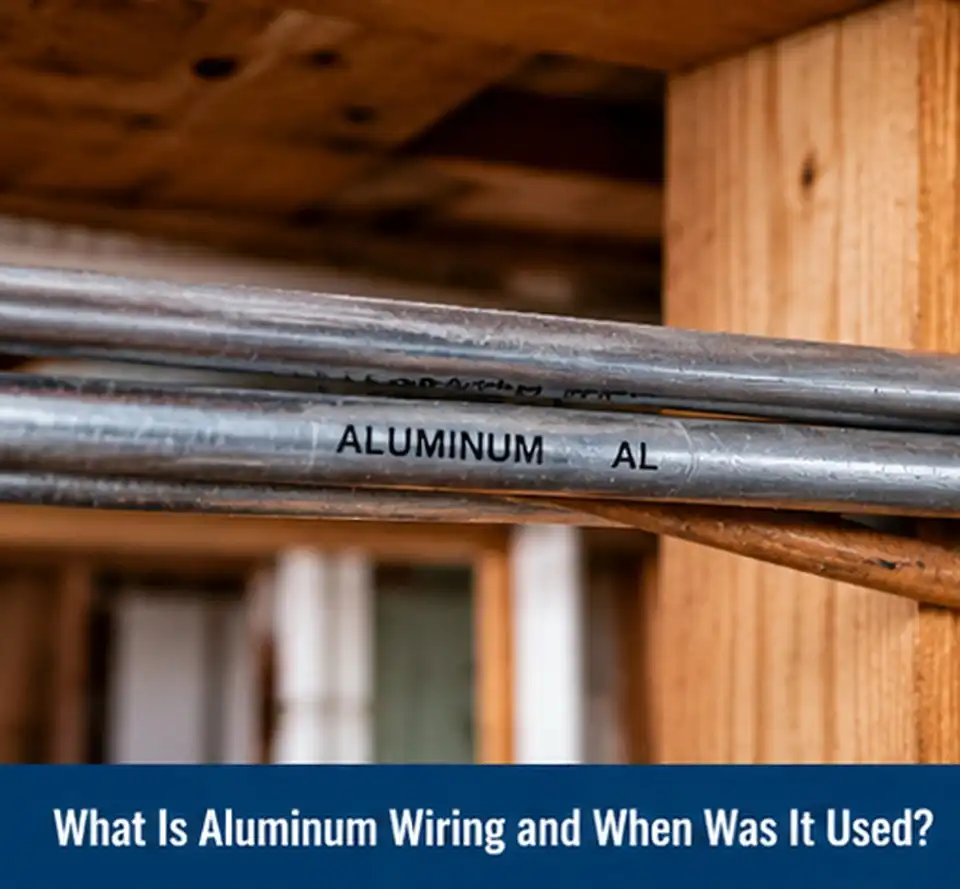
Aluminum wiring is electrical cable that uses aluminum instead of copper as the conductor. Builders used it in small branch circuits (the 15-amp and 20-amp circuits feeding outlets, switches, and lights) when copper prices spiked in the mid-1960s. The practice faded by the mid-1970s after field failures came to light.
Our certified electricians frequently see this in older Birmingham homes. On recent service calls across Jefferson and Shelby counties, we found it most often in ranch-style homes, split-levels, and early subdivisions from the late 1960s. Neighborhoods in Hoover, Vestavia Hills, Homewood, Bessemer, Fairfield, and Pelham all have housing stock from that era.
Check Also: GFCI Protection Birmingham AL: What the 2026 Code, Humid Summers, and Older Wiring Mean for Your Home
Two Types of Aluminum Wire: Know the Difference
Not all aluminum wire carries the same risk. This distinction matters more than anything else in this article.
| Wire Type | Where You Find It | Era | Risk Level |
|---|---|---|---|
| Single-strand aluminum (AA-1350 alloy) | Outlets, switches, light circuits | Roughly 1965 to 1973 | High at connections |
| Stranded aluminum (AA-8000 series alloy) | Service entrance, ranges, dryers, AC condensers | 1970s to today | Low when properly terminated |
| Copper-clad aluminum | Occasional branch circuits | Scattered use | Moderate, needs rated devices |
Stranded aluminum feeders are still legal and common today. The concern is the older solid branch wiring connected to standard devices built for copper.
How to Tell If Your Home Has It
You can check safely without removing a single cover. Follow these steps:
- Find the build date on your deed, tax record, or home inspection report.
- Look in the attic, basement, or garage for exposed cable. Read the printing on the outer jacket.
- Search for “AL,” “ALUMINUM,” or brand names like Kaiser Aluminum or Alcan every few feet.
- Check the panel label area from a distance. Silver-colored wire ends at the breakers suggest aluminum.
- Stop there. Do not remove the panel cover or pull outlets from the wall.
Visual clues only point you in the right direction. A professional electrical inspection for your Birmingham home confirms the wire type, tests connection heat, and documents which circuits need work.
Why Is Aluminum Wiring Dangerous?
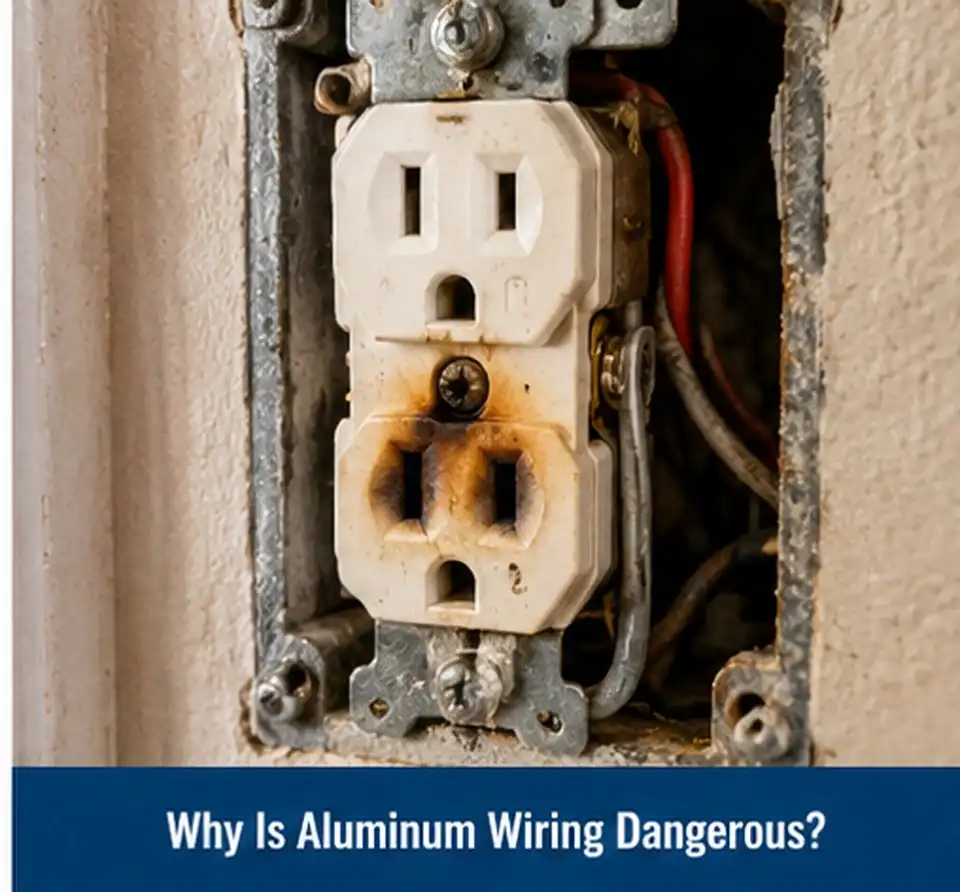
Aluminum wiring is dangerous because its connections loosen and overheat over time. The CPSC’s guide to repairing aluminum wiring reports that homes wired with pre-1972 aluminum are 55 times more likely to have one or more connections reach “fire hazard conditions” than homes wired with copper. That finding comes from CPSC-sponsored research into real house fires linked to aluminum connections.
The Four Failure Mechanisms
The problem starts with physics. Here is what happens at each connection:
- Thermal expansion: Aluminum expands and contracts about one-third more than copper with every heating cycle. Screws slowly loosen.
- Oxidation: Aluminum forms an oxide layer that resists current. Copper oxide still conducts reasonably well. Aluminum oxide does not.
- Cold creep: Soft aluminum deforms under screw pressure, then slowly pulls away from the terminal.
- Galvanic corrosion: Joining aluminum to brass or copper creates a dissimilar-metal reaction, which moisture makes worse.
Each mechanism raises resistance. Higher resistance means more heat. More heat means more expansion, and the cycle repeats until the connection glows, melts insulation, or starts a fire.
Check Also: Ceiling Fan Repair Birmingham AL: How a Failing Fan Affects Your Wiring, Comfort and Energy Bill
Why Central Alabama Makes It Worse
If you’ve spent a summer in Alabama, you know our attics hit 130°F or higher. Humidity often sits above 70% for months. Both conditions accelerate the failure cycle.
| Local Condition | Effect on Aluminum Connections |
|---|---|
| High summer humidity | Speeds galvanic corrosion at splices and device terminals |
| Hot attics | Adds heat to junction boxes and light fixtures |
| Heavy AC runtime | More load cycles per day, more expansion and contraction |
| Winter cold snaps | Space heaters and heat strips push high current through aging circuits |
| Frequent lightning storms | Surges stress already-weakened connections |
The takeaway: a connection that held for 50 years can still fail next August. Add a thermal scan to your next inspection request.
Warning Signs of Aluminum Wiring Problems in Birmingham Homes
Warning signs show up at devices, fixtures, and the panel before a fire starts. We see the same patterns repeat on service calls from Fairfield to Chelsea. Learn them now so you can act early.
Common Symptoms Checklist
- Warm or hot outlet covers or switch plates
- Burning plastic or “fishy” smell near outlets (overheating insulation)
- Flickering or dimming lights without an obvious cause
- Outlets or circuits that go dead and then come back
- Scorch marks or discoloration on cover plates
- Sparks or crackling when you plug something in
- Breakers tripping on light loads
- Static on radios or TVs tied to arcing in the wall
Warning Sign Severity Table
| Symptom | Severity | What To Do |
|---|---|---|
| Burning smell, smoke, or sparks | Emergency | Shut off the circuit if safe. Leave and call 911 if you see smoke. |
| Outlet or switch hot to the touch | Urgent | Stop using it. Turn off the breaker. Call an electrician today. |
| Discolored or melted cover plate | Urgent | Turn off the breaker. Schedule same-day service. |
| Flickering lights on one circuit | High | Book service within days. Avoid heavy loads on that circuit. |
| Intermittent dead outlets | High | Book service within days. Do not open the box. |
| Aluminum found, no symptoms | Moderate | Schedule an inspection and plan remediation. |
A hot outlet is never a “watch and wait” problem. If you notice heat, smoke, or arcing after hours, reach an emergency electrician in the Birmingham area instead of waiting for Monday.
What Not to Do
Most dangerous repairs we fix were done with good intentions. Avoid these mistakes:
- Don’t swap in standard outlets. Regular devices are built for copper only.
- Don’t use ordinary wire nuts to join aluminum and copper.
- Don’t tighten terminal screws yourself. Overtightening crushes soft aluminum.
- Don’t wrap aluminum around “push-in” back-stab terminals. These fail quickly.
- Don’t paint over warm cover plates. Heat discoloration is a warning, not a cosmetic issue.
Remediation Options for Aluminum Wiring
Remediation means making every aluminum connection safe, either by repairing the terminations or replacing the wire. The CPSC recognizes three approaches with very different durability. Your choice depends on budget, home age, and remodel plans.
Option 1: COPALUM Crimp Connectors
COPALUM is a crimp system made by TE Connectivity. A trained electrician attaches a short copper pigtail to each aluminum wire using a specialized crimping tool that cold-welds the metals together. The CPSC calls this a permanent repair.
- Pros: Proven long-term results, CPSC-recommended, no visible change to devices
- Cons: Limited installer availability, special tooling required, can cost more
Option 2: AlumiConn Connectors
AlumiConn is a small purple lug connector with set screws for each wire. It joins aluminum to a copper pigtail, which then connects to a standard device. The CPSC lists it as an acceptable permanent repair when installed to the manufacturer’s torque specs.
- Pros: Widely available, lower cost than COPALUM, accepted by many insurers
- Cons: Bulky in crowded boxes, requires a torque screwdriver, quality depends on installer skill
We see AlumiConn used most often by our local service partners. It works well in Birmingham’s older homes, where boxes are often shallow metal boxes with little room. A skilled installer plans for box fill before starting.
Option 3: CO/ALR Rated Devices
CO/ALR devices are outlets and switches rated for direct connection to aluminum. They are a better choice than standard devices. The CPSC treats them as an alternative, not an equal to pigtailing, because they don’t fix splices inside junction boxes or fixtures.
- Pros: Lower cost, quick install
- Cons: Doesn’t address hidden splices, limited styles (no CO/ALR GFCI or most smart switches)
Option 4: Full Rewiring
Full rewiring replaces aluminum branch circuits with new copper cable. It is the only option that removes the hazard completely. It also adds grounding, AFCI protection, and capacity for modern loads.
Pigtailing and partial circuit replacement both fall under professional electrical wiring repair and installation. Ask your electrician which method fits each room.
Remediation Cost Comparison (Birmingham Area, 2026 Estimates)
| Method | Typical Cost per Connection Point | Whole-Home Range (1,500 to 2,000 sq ft) | Expected Durability | CPSC Status |
|---|---|---|---|---|
| CO/ALR devices | $15 to $40 | $800 to $2,000 | Moderate | Alternative |
| AlumiConn pigtailing | $40 to $85 | $2,500 to $6,000 | Long-term | Permanent repair |
| COPALUM crimping | $55 to $100 | $3,500 to $8,000 | Long-term | Permanent repair |
| Full rewiring | N/A | $9,000 to $22,000 | Permanent | Complete fix |
Prices vary by home size, access, drywall repair, and permit fees. Crawlspace homes in Shelby County often cost less to rewire than slab homes with finished ceilings. Get two written quotes that list connection counts and permit costs line by line.
Methods to Avoid
- Standard twist-on wire nuts (copper-only)
- “Al/Cu” rated twist-on connectors without proven field testing; CPSC-sponsored testing raised failure concerns
- Push-in connectors not listed for aluminum
- Electrical tape splices of any kind
Aluminum vs. Copper: How the Metals Compare
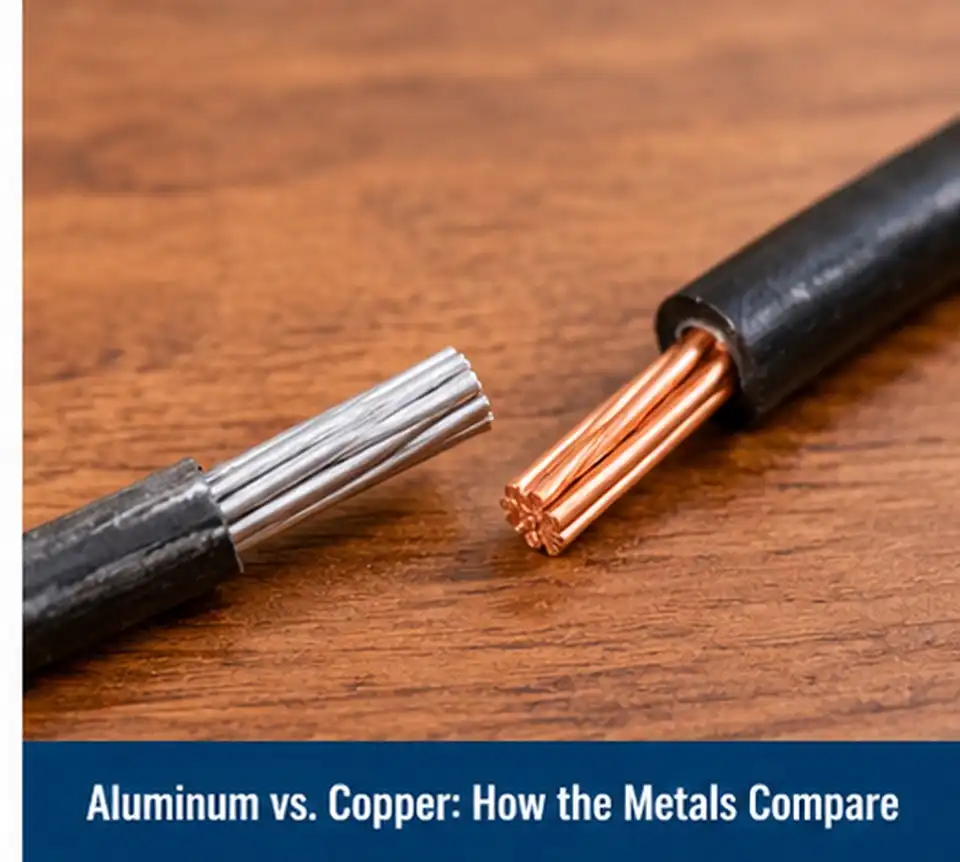
Copper outperforms aluminum in nearly every property that matters for small home circuits. Aluminum is lighter and cheaper. That’s why it still makes sense for large service feeders, where it is sized up and terminated with rated lugs.
| Property | Copper | Aluminum (AA-1350 branch wire) |
|---|---|---|
| Conductivity | 100% (baseline) | About 61% of copper |
| Wire size for 20-amp circuit | 12 AWG | 10 AWG |
| Thermal expansion | Lower | About 36% higher |
| Oxide conductivity | Oxide still conducts | Oxide resists current |
| Creep under pressure | Minimal | Significant |
| Corrosion with dissimilar metals | Low | High, worse in humidity |
| Weight | Heavier | About 70% lighter |
| Cost per foot | Higher | Lower |
| Typical lifespan at connections | 50+ years | Failures common after decades of cycling |
The numbers explain the field results. Aluminum isn’t a bad conductor. It’s a poor partner for screw terminals designed for copper.
How Aluminum Wiring Affects HVAC Circuits
HVAC circuits draw the heaviest, longest loads in most Birmingham homes. That makes them a priority during any aluminum wiring assessment. Our local service partners check these connections first in older homes.
Where Aluminum Shows Up in Heating and Cooling Systems
Most condenser and air handler feeders in older homes use stranded aluminum. That wire is acceptable when terminated correctly. The risk comes from unrated lugs, missing antioxidant compound, or loose terminations at the disconnect.
| HVAC Component | Typical Circuit | Common Wire Type in 1970s Homes | Key Check |
|---|---|---|---|
| AC condenser / heat pump (3 ton) | 240V, 25 to 35A | Stranded aluminum | AL/CU-rated disconnect lugs |
| Air handler with 10 kW heat strips | 240V, 60A | Stranded aluminum | Torque and heat discoloration |
| Gas furnace blower | 120V, 15A | Often single-strand aluminum | Pigtail at furnace switch |
| Window or wall AC unit | 120V, 15 to 20A | Often single-strand aluminum | Highest-risk outlet in the house |
| Thermostat | 24V low voltage | Copper | Not affected |
Real-World Risks We See
On recent service calls across Jefferson and Shelby counties, three HVAC problems come up again and again:
- Window units on aluminum outlets. A 12,000 BTU window unit runs for hours on a 15-amp circuit. That steady load overheats aged terminals fast.
- Heat strip surges in January. When a cold front drops temperatures into the 20s, heat pump backup strips pull 40 amps or more. Loose aluminum lugs at the air handler can scorch.
- Corroded outdoor disconnects. Rain and humidity reach the condenser disconnect box. Aluminum lugs without antioxidant paste corrode within years.
Capacity and Efficiency Upgrades
Upgrading to a high-efficiency SEER2-rated heat pump often triggers new circuit work. Modern variable-speed systems are sensitive to voltage drop, which poor aluminum connections create. A home with aluminum branch wiring and a 100-amp panel may also lack room for new HVAC circuits, an EV charger, or a generator inlet.
In those cases, combining remediation with an electrical panel upgrade saves a second permit and a second visit. Ask your HVAC contractor and electrician to coordinate before the new system arrives.
Repair vs. Replace: Which Option Fits Your Home?
The right answer depends on how much aluminum you have, its condition, and your plans for the house. Pigtailing is a solid permanent repair. Rewiring makes more sense when other upgrades are already on the table.
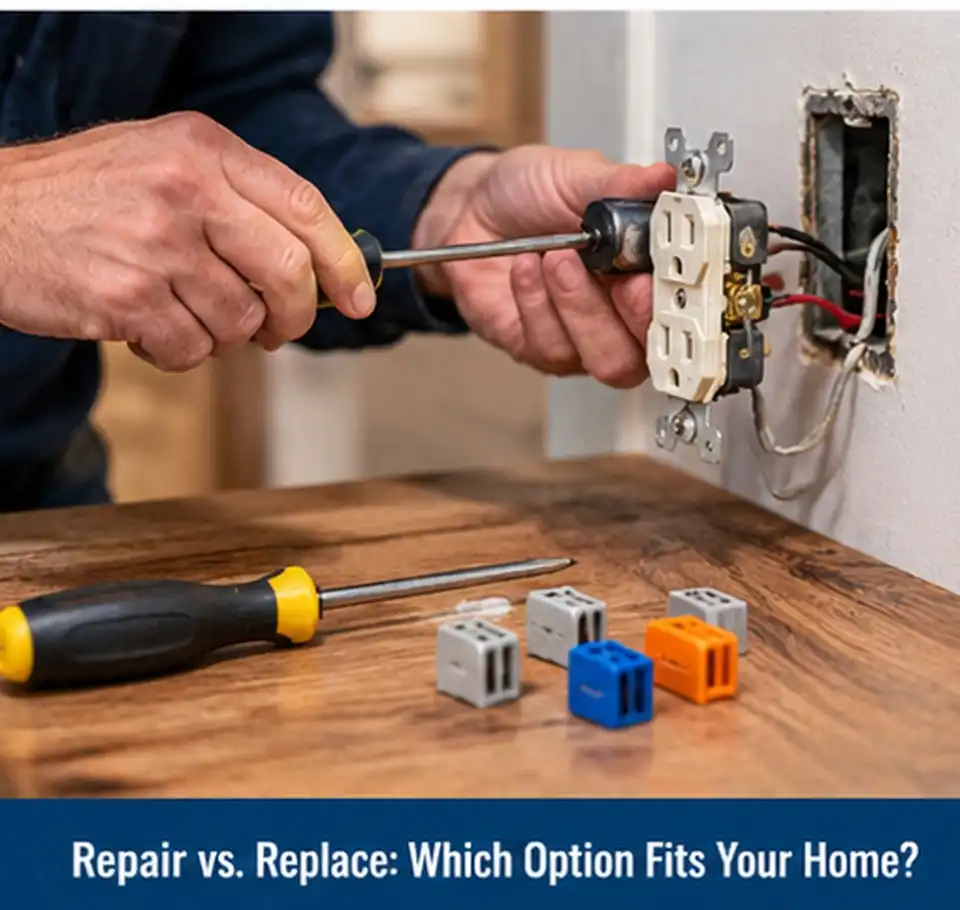
Repair vs. Replace Decision Table
| Your Situation | Best Fit | Why |
|---|---|---|
| Aluminum found, no damage, staying long-term | AlumiConn or COPALUM pigtailing | Permanent fix at lower cost |
| Several scorched or melted devices | Rewire affected circuits, pigtail the rest | Damaged wire may be brittle |
| Major remodel planned | Full rewiring | Walls are already open |
| Ungrounded two-wire circuits plus aluminum | Full rewiring | Fixes grounding and aluminum together |
| Selling within a year | Pigtailing with documentation | Satisfies most buyers and insurers |
| Insurer requires remediation | Pigtailing or rewiring per insurer list | Some carriers name accepted methods |
| Small panel plus aluminum | Rewire and upgrade panel | One permit, one project |
Pros and Cons at a Glance
Pigtailing (AlumiConn/COPALUM)
- Pros: Lower cost, minimal drywall damage, done in one to three days
- Cons: Wire stays in walls, future work must use rated methods
Full Rewiring
- Pros: Removes the hazard, adds grounding and AFCI protection, boosts resale value
- Cons: Higher cost, drywall patching, one to three weeks of work
If your inspection shows widespread damage, a whole-home rewiring project is usually the better long-term investment. Ask for a room-by-room quote so you can phase the work if needed.
Alabama Code and Permit Requirements
Alabama regulates electrical work through state licensing and local permits. Every electrician who repairs or replaces aluminum connections must hold a valid license. Your city or county issues the permit and inspection.
What the Rules Require
| Requirement | What It Means for You |
|---|---|
| State license | Electricians must be licensed through the Alabama Electrical Contractors Board |
| Local permit | Rewiring and circuit replacement usually need a permit from your city or county |
| National Electrical Code (NEC) | Local jurisdictions adopt an NEC edition; terminals must be listed for the conductor material |
| Torque specs | Newer NEC editions require connections tightened to manufacturer torque values |
| AFCI protection | Replaced or extended branch circuits often trigger arc-fault protection requirements |
| Inspection | A local inspector verifies the work before walls close |
Permit offices differ across the metro. The City of Birmingham, Hoover, Pelham, Alabaster, and unincorporated Jefferson and Shelby County areas each run their own process. Your electrician should pull the permit and schedule the inspection.
Verify Before You Hire
Always confirm credentials before work starts. Use these steps:
- Ask for the license number and proof of insurance.
- Look up the license on the Alabama Electrical Contractors Board website.
- Confirm who pulls the permit and include it in the written quote.
- Ask about aluminum experience. Request the connector method and torque tool they use.
- Keep all paperwork. Insurers and buyers often ask for remediation records.
A clean permit record is worth real money at resale. Store your final inspection sign-off with your home documents.
FAQs
Is aluminum wiring illegal in Alabama?
No. Existing aluminum wiring is not illegal in Alabama. New work must use listed connectors and devices rated for aluminum, and modified circuits must meet the adopted NEC edition.
Will my homeowners insurance cover a house with aluminum wiring?
Coverage depends on the carrier. Some insurers decline or surcharge homes with unremediated aluminum branch wiring. Many accept homes after documented pigtailing with AlumiConn or COPALUM.
Can I sell a house with aluminum wiring?
Yes. Alabama sellers should disclose known aluminum wiring. Buyers’ inspectors flag it often, so documented remediation reduces negotiation friction and closing delays.
How long does pigtailing take?
A typical 1,500 to 2,000 square foot home takes one to three days. Homes with crowded boxes or many fixtures take longer.
Do smart switches and GFCI outlets work with aluminum wiring?
Not directly. Most smart switches and GFCIs are listed for copper only. Pigtailing with AlumiConn or COPALUM lets you install them safely.
Is the aluminum service cable to my panel a problem?
Usually not. Stranded aluminum service and feeder cables are standard today. They need rated lugs, antioxidant compound, and proper torque to stay safe.
How often should a home with aluminum wiring be inspected?
Plan an inspection every three to five years, plus any time you notice heat, odor, or flickering. Homes that have been pigtailed still benefit from periodic thermal scans.
Your Next Steps for a Safer Home
Aluminum wiring is manageable. The hazard sits at the connections, and proven repairs exist. The worst choice is waiting for a hot outlet or a burning smell to force your hand.
Here’s the order we recommend for any homeowner dealing with aluminum wiring in house Birmingham AL listings or long-owned family homes:
- Confirm the wire type by checking cable jackets in the attic or basement.
- Stop using any warm outlet and turn off its breaker.
- Schedule a licensed inspection with thermal scanning.
- Choose a CPSC-recognized repair: AlumiConn, COPALUM, or full rewiring.
- Plan HVAC and panel needs together so one permit covers everything.
- Verify the license and keep every permit and invoice.
At Birmingham AL Electrician, one phone call connects you with an independent, licensed electrician who knows older homes from Bessemer to Chelsea. Call today, share your address and your home’s build year, and get a clear plan for every aluminum connection in your house.