
Room Heater Safety: What Space Heaters Mean for Your Birmingham Home’s Wiring and Power Bill
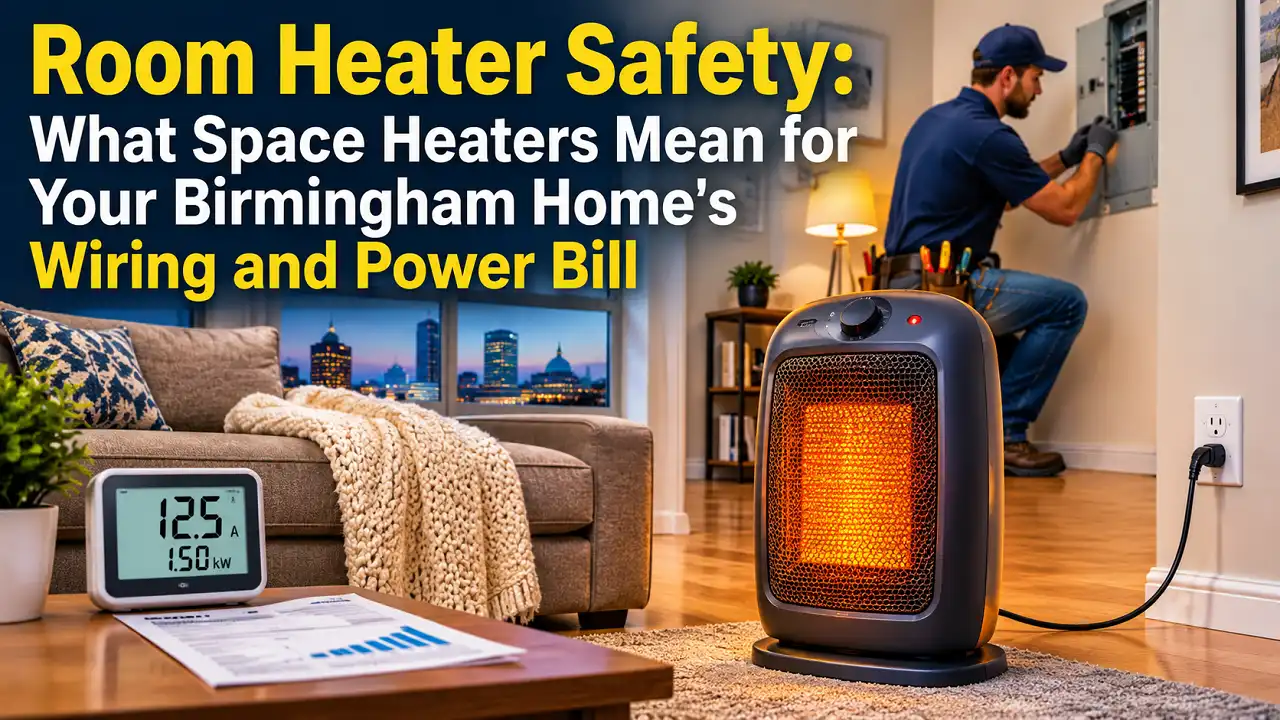
A portable space heater looks harmless on a bedroom floor. Once it is plugged in, a standard 1,500-watt heater draws about 12.5 amps for hours at a time. That makes it one of the heaviest loads a bedroom circuit ever carries. Room heater safety depends on three things: the heater itself, the outlet and circuit feeding it, and the space around it. If one of them fails, you end up with a hot appliance next to bedding, fed by a receptacle that was never built for that load.
Central Alabama winters stay mild until a cold snap pushes overnight lows into the 20s. Then heaters come out of closets across town in the same week. On recent service calls across Jefferson and Shelby counties, our local service partners see the results: scorched outlets, melted plugs and power strips that turned brown at the cord.
There is also a timely reason to check your unit. On Oct. 29, 2026, about 338,800 DREO space heaters were recalled over fire and burn hazards.
Cold-Weather Safety Brief
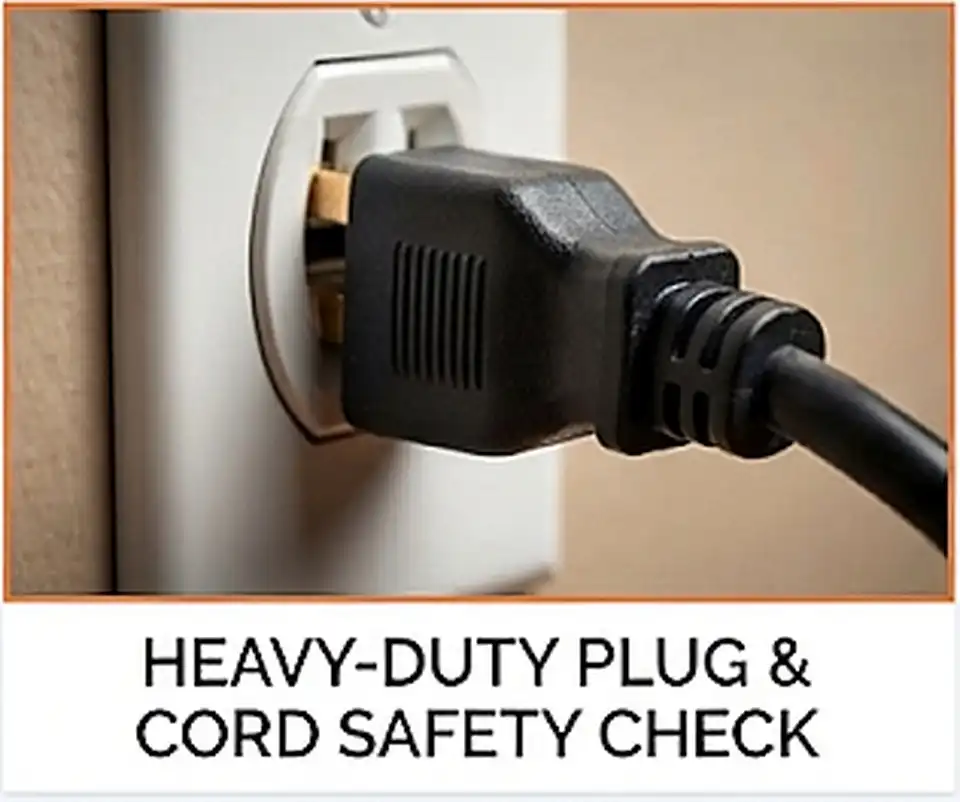
- Plug every space heater directly into a wall outlet. Extension cords and power strips overheat under a 12.5-amp continuous load.
- Keep a 3-foot clear zone around the heater, and buy only units with tip-over and overheat shutoff.
- Check your model against the recall list today. If you own a DREO DR-HSH015, stop using it and request the free replacement.
Why Space Heaters Stress Your Home’s Electrical System
Space heaters stress home wiring because they draw high current for long stretches. A hair dryer pulls similar power for five minutes. A heater pulls it all night. The National Electrical Code treats any load running three hours or more as continuous, which means a 15-amp circuit has a practical ceiling of about 12 amps.
Heater Load Breakdown
| Heater Setup | Watts | Amps at 120V | Share of a 15-Amp Circuit | Share of a 20-Amp Circuit |
|---|---|---|---|---|
| Low setting | 750 W | 6.25 A | 42% | 31% |
| High setting | 1,500 W | 12.5 A | 83% | 63% |
| Heater + TV or gaming PC | 1,800 W | 15 A | 100% | 75% |
| Heater + vacuum | 2,700 W | 22.5 A | 150% (trips) | 113% (trips) |
| Two heaters, same circuit | 3,000 W | 25 A | 167% (trips) | 125% (trips) |
A heater on high already sits above that 12-amp continuous ceiling on a 15-amp circuit. Add a TV, a lamp or a phone charger, and the circuit runs at its limit. The breaker may hold for a while. The weakest connection on the circuit heats up first.
Why Older Birmingham Homes Feel It First
Our certified electricians frequently see this in older Birmingham homes. Houses in Fairfield, Bessemer and the first-ring neighborhoods near downtown often have two-prong outlets, small 60- to 100-amp panels and receptacles worn loose by decades of use. A worn outlet grips the plug blades weakly. That creates resistance, and resistance under a 12.5-amp load turns into heat at the faceplate.
Some homes built in the late 1960s and 1970s also have aluminum branch wiring. Aluminum expands and contracts more than copper, so connections loosen over time. A heater is often the first load heavy enough to expose that weak spot. If the plug feels warm or the faceplate shows brown marks, have a local electrician repair the warm or loose outlet before the heater goes back in.
Room Heater Safety Rules From UAB and National Fire Data
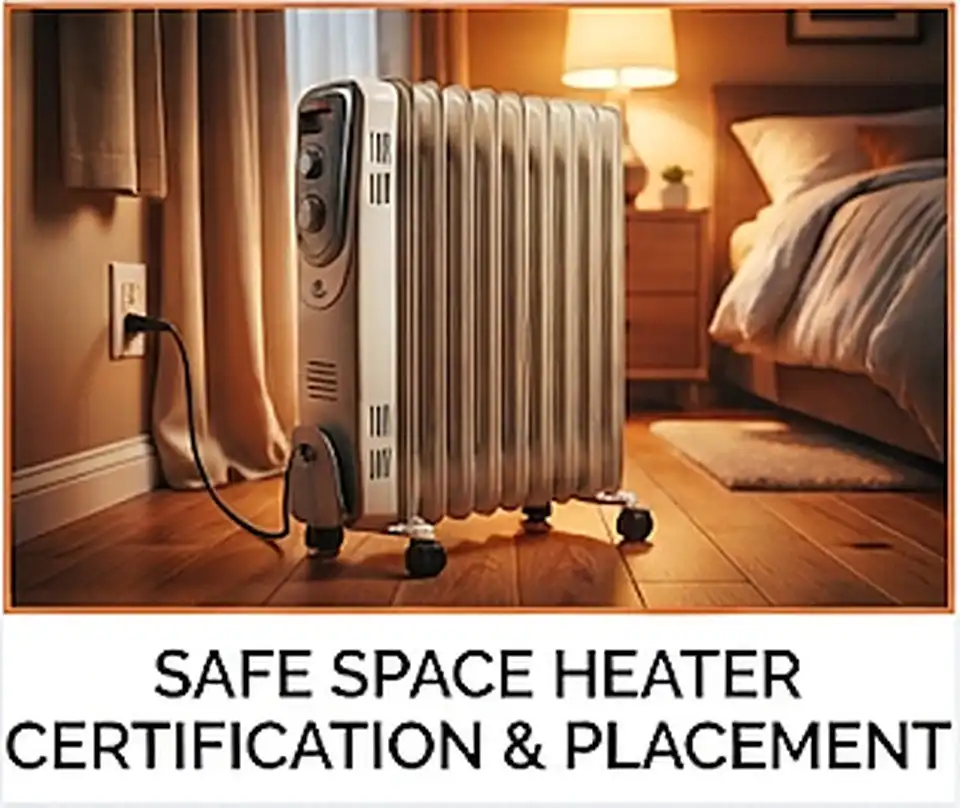
Room heater safety rules exist because heaters cause a large share of winter fires. According to the National Fire Protection Association, heating equipment is a leading cause of U.S. home fires. Space heaters are involved in roughly a third of home heating fires and most heating fire deaths. The most common factor is placing the heater too close to things that burn: mattresses, bedding, curtains and upholstered furniture.
The University of Alabama at Birmingham Environmental Health & Safety office publishes a short do-and-don’t list for space heaters. These room heater safety tips line up with what our partners find on service calls.
| Rule (UAB EHS) | Why It Matters | Electrical Angle |
|---|---|---|
| Plug directly into the wall | Cords and strips overheat | Most power strips aren’t built for a continuous 12.5 A load |
| Keep 3 feet of clearance | Bedding and curtains ignite | Also keep cords out of walkways and from under rugs |
| Buy auto shutoff | Tip-overs and forgotten units | Look for tip-over and overheat protection |
| Use low-moisture rooms | Moisture damages the unit | Bathrooms raise shock and ground-fault risk |
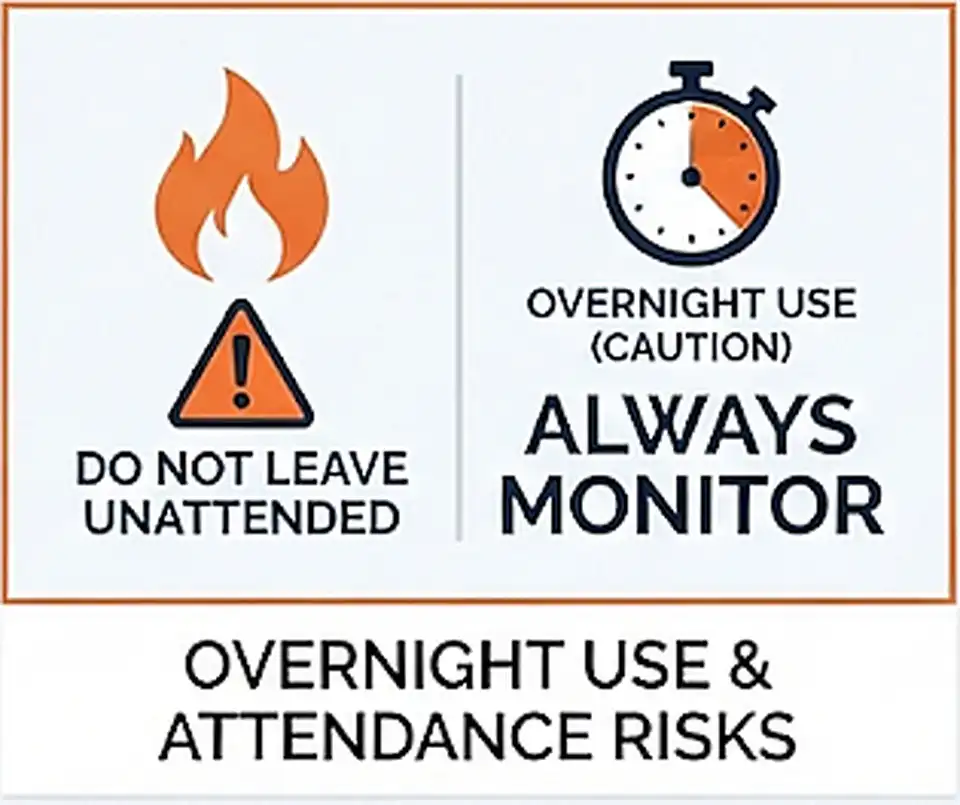
| Never leave it unattended | Most heater fires start unwatched | Unplug before leaving or going to bed |
| Skip extension cords | Cords overheat and trip people | Undersized cords melt at the plug end first |
| Don’t repair it yourself | Internal faults hide | Take it to a qualified appliance service center |
Add one rule that UAB’s list implies but doesn’t spell out: buy a listed heater. Look for a UL, ETL or CSA mark on the label. That mark means a testing lab checked the unit against the safety standard for portable electric heaters.
The October 2026 DREO Recall: What to Do Now
The DREO recall is the biggest space heater recall of this heating season. The Consumer Product Safety Commission announced it on Oct. 29, 2026, as WBRC reported. DREO received 17 reports of ignition, including three with property damage and one hand burn.
| Recall Detail | What You Need to Know |
|---|---|
| Model | DREO DR-HSH015 |
| Units recalled (U.S.) | About 338,800 (plus 36,300 in Canada) |
| Sold through | DREO, Best Buy, Home Depot and other retailers |
| Sale dates | September 2025 through October 2026 |
| Hazard | Can overheat and catch fire |
| Remedy | Free replacement heater from DREO |
Follow these steps if you own one:
- Find the model number on the label on the back or bottom of the heater.
- Stop using it right away if the label reads DR-HSH015.
- Unplug the heater before doing anything else.
- Contact DREO for the free replacement.
- Cut the power cord after unplugging, as the recall instructs.
- Send the photo of the cut cord to DREO to confirm the claim.
Check every other heater in your house against the CPSC recall database before the next cold front arrives.
Space Heater Types Compared
Space heater types differ in surface temperature, tip-over risk and how fast they heat. Those differences matter more than brand. The table below compares the five types our partners see most often in Jefferson and Shelby County homes.
| Heater Type | How It Heats | Surface Temp | Tip-Over Risk | Best Use |
|---|---|---|---|---|
| Ceramic (fan-forced) | Fan blows air across ceramic plates | Moderate | Moderate | Quick heat in small rooms |
| Oil-filled radiator | Heats sealed oil, radiates slowly | Warm, not red-hot | Low | Steady heat in bedrooms |
| Infrared / quartz | Heats people and objects directly | High (glowing element) | Higher | Spot heating while you sit |
| Wall-mounted panel | Convection from a fixed panel | Low to moderate | None | Permanent supplemental heat |
| Unvented propane or kerosene | Burns fuel indoors | Very high | High | Not recommended indoors |
Ceramic Heaters: Pros and Cons
Pros
- Heats fast and moves warm air across the room
- Compact and light to move
- Widely available with tip-over and overheat shutoff
Cons
- Fan noise in quiet bedrooms
- Pulls dust through the unit, so it needs regular cleaning
- Lightweight body tips more easily than heavier designs
Oil-Filled Radiators: Pros and Cons
Pros
- Lower surface temperature than glowing elements
- Silent operation with no fan
- Heavy, wide base resists tipping
Cons
- Slow warm-up of 20 to 30 minutes
- Heavy to carry between rooms
- Still draws 1,500 W on high, so circuit limits still apply
Fuel-Burning Heaters: Why We Steer Homeowners Away
Unvented fuel heaters add a hazard electric units don’t have: carbon monoxide. They also release moisture, which Birmingham homes don’t need in a humid climate. If you use any fuel-burning appliance, a working CO alarm is mandatory, not optional.
Safe Space Heaters for Overnight Use: What the Ratings Really Mean
No portable heater is rated to run unattended through the night. UAB’s guidance is direct: unplug the heater before you go to bed. Marketing terms like “bedroom safe” describe safety features, not permission to sleep next to a running unit. Still, people searching for safe space heaters for overnight use deserve a clear ranking of risk.
Features That Lower Overnight Risk
| Feature | What It Does | Priority |
|---|---|---|
| Tip-over switch | Cuts power if the heater falls | Must have |
| Overheat shutoff | Cuts power when internal temp climbs | Must have |
| Safety listing (UL, ETL, CSA) | Confirms lab testing | Must have |
| Cool-touch housing | Lowers burn risk for kids and pets | Strongly recommended |
| Built-in thermostat | Cycles off once the room is warm | Strongly recommended |
| Auto-off timer | Shuts down after a set time | Strongly recommended |
| Smart plug control | Remote shutoff from your phone | Avoid unless the heater maker approves it |
Overnight Risk by Heater Type
| Heater Type | Overnight Risk Rating | Why |
|---|---|---|
| Oil-filled radiator | Lower | Low surface temp, stable base, no exposed element |
| Ceramic with all safety features | Moderate | Fan pulls lint; lighter body |
| Infrared / quartz | Higher | Glowing element near bedding |
| Older heater without auto shutoff | High | No protection if it tips or overheats |
| Unvented fuel heater | Do not use while sleeping | Carbon monoxide and open flame |
The safest approach to room heater safety at night is simple. Preheat the bedroom for 30 minutes, turn the heater off, then sleep. If a room stays too cold for that to work, the real problem is usually your ductwork, insulation or HVAC sizing. A heater is a patch, not a fix.
Electric Heater Safety Precautions for Outlets and Circuits
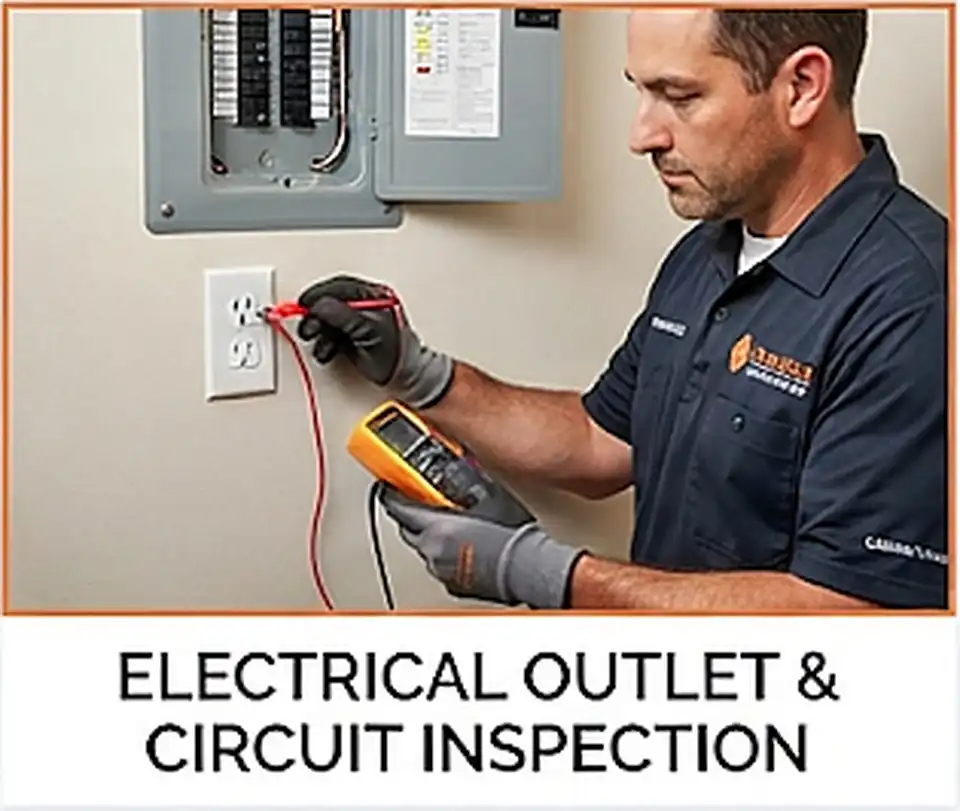
Electric room heater safety in Birmingham, AL starts at the receptacle. The heater, the plug and the outlet form one connection. If any part of that chain is weak, heat builds where you can’t see it.
| Precaution | Why It Matters | Warning Sign |
|---|---|---|
| Use one heater per circuit | Two heaters overload a 15- or 20-amp circuit | Breaker trips within minutes |
| Avoid shared circuits | Other loads stack on top of 12.5 A | Lights dim when the heater cycles on |
| Check outlet grip | Loose contacts create heat | Plug slides out or sags |
| Never use a GFCI bathroom outlet | Moisture plus heat equals shock risk | GFCI trips repeatedly |
| Inspect the plug | Discoloration means overheating | Brown, warped or melted prongs |
| Keep cords uncovered | Rugs trap heat and hide damage | Cord feels warm along its length |
| Unplug when not in use | Removes standby fault risk | N/A |
Run this five-step check before the first cold night of the season:
- Read the label for a safety listing and the model number.
- Inspect the cord for cracks, kinks or flattened sections.
- Plug into a wall outlet and confirm the plug fits snugly.
- Run the heater on high for 15 minutes, then carefully touch the plug and faceplate.
- Stop using that outlet if either feels more than slightly warm.
Repeated breaker trips tell you the circuit is overloaded or something on it is failing. Never swap in a larger breaker to stop the tripping. The wire stays the same size, so a bigger breaker only lets it run hotter. A licensed electrician can test the circuit and handle circuit breaker repair if the breaker itself is worn.
How Space Heaters Interact With Your Heat Pump or Furnace
Space heaters and central HVAC work against each other when you place them carelessly. Most newer homes in Alabaster, Pelham and Chelsea heat with a heat pump (a system that moves heat from outdoor air into the house). Heat pumps lose capacity as outdoor temperatures fall. That is when auxiliary heat strips (electric backup coils in the air handler) switch on, and that is when many homeowners reach for a space heater too.
If you’ve spent a winter in Alabama, this integrated heating setup makes complete sense once you see how the pieces affect each other.
| Scenario | What Happens | Better Approach |
|---|---|---|
| Heater near the thermostat | Thermostat reads the room as warm; the rest of the house stays cold | Keep heaters out of the thermostat’s room |
| Closing vents in unused rooms | Raises duct pressure and can strain the blower | Leave vents open; ask an HVAC tech about zoning |
| One room always cold | Heater masks a duct leak or insulation gap | Have ducts and insulation checked |
| Aux heat light on in a cold snap | Normal below the heat pump’s balance point | Don’t add heaters to “help” it |
| Heater during an outage | Generator may be undersized for 1,500 W | Confirm generator capacity first |
Room heater safety also shows up on your power bill. A heater on high uses 1.5 kilowatt-hours every hour. The estimates below use about 15 cents per kWh. Check your own utility bill for your actual rate.
| Daily Use (1,500 W on High) | kWh per Day | Est. Cost per Day | Est. Cost per Month |
|---|---|---|---|
| 2 hours | 3 kWh | $0.45 | $13.50 |
| 4 hours | 6 kWh | $0.90 | $27 |
| 8 hours | 12 kWh | $1.80 | $54 |
| Two heaters, 8 hours each | 24 kWh | $3.60 | $108 |
A heater running eight hours a day adds about $54 a month. That money often goes further as a duct repair or an HVAC service visit. Pull your last two winter bills and compare them before buying a second heater.
Room Heater Safety in Birmingham, AL: What Electrical Upgrades Cost
Electrical upgrades cost less than the damage a heater fire causes. The ranges below reflect typical labor and materials around Jefferson and Shelby counties. The independent electrician who performs the work sets the final price after seeing your home.
| Upgrade | Typical Range | When You Need It |
|---|---|---|
| Replace a worn outlet | $100 to $250 | Plug sags or faceplate feels warm |
| Repair a scorched outlet and wiring | $150 to $400 | Brown marks or melted plastic |
| Add a dedicated 20-amp circuit | $300 to $800+ | Room needs regular supplemental heat |
| Replace a breaker (standard or AFCI) | $150 to $350 | Breaker runs hot or won’t reset |
| Hardwired smoke alarm (per unit) | $100 to $300 | Missing, expired or battery-only alarms |
| Whole-home electrical inspection | $150 to $400 | Older home, before heavy winter use |
| Panel upgrade (100 to 200 amps) | $1,800 to $4,500+ | Small panel can’t support current loads |
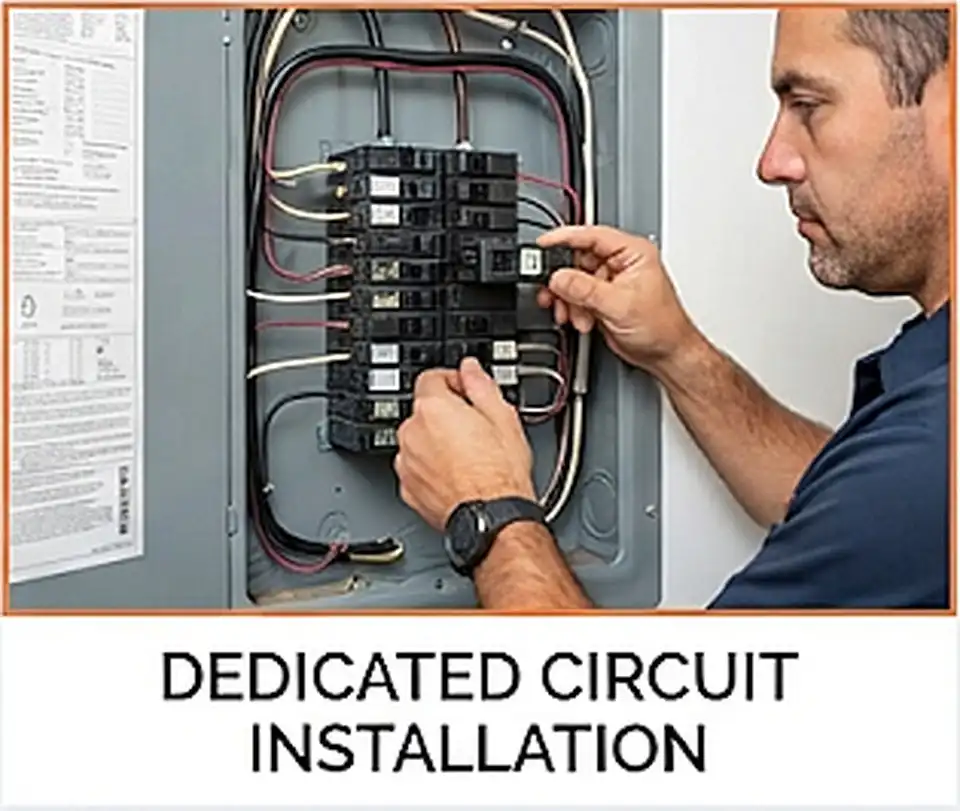
The room heater safety Birmingham AL cost question usually comes down to one choice. You either fix the weak outlet or you add a dedicated circuit. If a room depends on supplemental heat every winter, ask an electrician about adding a dedicated circuit so the heater stops sharing power with everything else.
Ask for quotes that list the outlet, wire run, breaker, permit and patching as separate line items. Then verify the contractor’s license with the Alabama Electrical Contractors Board before work begins.
Troubleshooting Space Heater Problems
Most space heater problems trace back to the circuit, the outlet or the heater’s safety switches. Work through this table before you buy a new unit or call for service.
| Symptom | Likely Cause | What to Do | Call an Electrician? |
|---|---|---|---|
| Breaker trips on startup | Circuit overloaded | Move the heater to a less-loaded circuit | If it trips with nothing else on |
| Breaker trips after an hour | Continuous load plus other devices | Unplug other loads or use low setting | If it keeps happening |
| Outlet or plug feels hot | Loose contacts or worn receptacle | Stop using that outlet now | Yes |
| Burning smell | Dust on elements or a wiring fault | Unplug; let it cool; inspect | Yes, if it comes from the wall |
| Heater shuts off repeatedly | Overheat or tip-over switch active | Check for blocked vents or uneven floor | No, unless outlet is warm |
| Lights dim when heater cycles | Shared circuit or loose connection | Note which lights dim | Yes, if dimming is severe |
| Heater won’t turn on | Tripped breaker, GFCI or internal fault | Check breaker and GFCI; try another outlet | If outlets are dead |
Follow these steps when a heater trips a breaker:
- Unplug the heater and everything else on that circuit.
- Reset the breaker by pushing it fully off, then back on.
- Plug the heater in alone and run it on low.
- Watch for a repeat trip over the next 30 minutes.
- Stop and call if the breaker trips with only the heater running.
A breaker that trips is doing its job. Resetting it over and over hides the warning instead of answering it. A warm faceplate or a burning smell from the wall means the problem is in the wiring, not the heater.
Room Heater Safety Checklist for Birmingham Homes
A room heater safety checklist works best when you run it before the first cold front, not during it. Print this list and keep it near your heater storage.
- Check the recall list for every heater you own, starting with DREO DR-HSH015.
- Confirm a safety listing (UL, ETL or CSA) on the label.
- Test tip-over shutoff by gently tilting the running heater.
- Inspect the cord and plug for cracks, browning or melted plastic.
- Plug directly into a wall outlet, never an extension cord or power strip.
- Keep 3 feet of clearance from beds, curtains, furniture, kids and pets.
- Use one heater per circuit and keep other heavy loads off it.
- Keep heaters out of bathrooms and other damp rooms.
- Turn heaters off when you leave the room or go to bed.
- Test smoke alarms monthly and replace them every 10 years.
- Install CO alarms if your home has any gas appliance, fireplace or attached garage.
Smoke alarms are your last line of protection if a heater fails. Many older Birmingham homes still rely on a single battery unit in the hallway. Our partners can handle hardwired smoke alarm installation with interconnection, so every alarm sounds when one detects smoke.
Quick Answers to Key Questions
Is it safe to leave a space heater on overnight?
No portable heater is designed for unattended overnight use. UAB EHS advises unplugging heaters before bed. If you need heat while sleeping, preheat the room and turn the heater off, or fix the underlying HVAC or insulation problem.
Can I plug a space heater into a power strip?
No. Most power strips aren’t built for a continuous 12.5-amp load. Plug the heater directly into a wall outlet in good condition.
Why does my outlet get warm when the heater runs?
A warm outlet signals loose contacts, a worn receptacle or a loose wire connection behind it. Stop using that outlet and have it inspected.
Which space heater type is safest?
Oil-filled radiators with tip-over and overheat shutoff carry the lowest surface temperatures and the most stable bases. Every type still needs 3 feet of clearance and a wall outlet.
How do I know if my heater is recalled?
Find the model number on the label, then search it on the CPSC recall database. Check every heater you own, not just new ones.
Does indoor room heater safety change in older Birmingham homes?
Yes. Older homes often have two-prong outlets, small panels and worn receptacles, so a heater stresses the system faster. An electrical check before winter catches those weak points early.
Your Next Step
A space heater is only as safe as the outlet, circuit and space around it. Plug it into the wall, keep 3 feet clear, check it against the DREO recall, and turn it off before bed. Good room heater safety also means watching for warm outlets, dimming lights and repeated breaker trips, because those signs point to wiring trouble, not heater trouble. If your home is older or you rely on heaters every winter, schedule a whole-home electrical inspection with a licensed local electrician before the next cold snap reaches Jefferson and Shelby counties.